New book advocates full-reserve banking to tackle debt, inflation, and poverty
Pakistan’s mounting debt burden, persistent inflation, and widening economic inequalities require a fundamental reassessment of the modern monetary system, according to experts at the launch of a new book that questions the role of commercial banks in money creation and proposes an alternative banking framework.
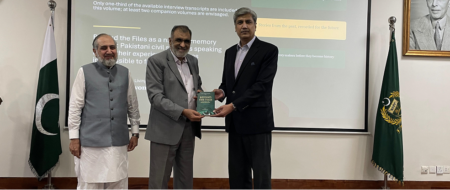
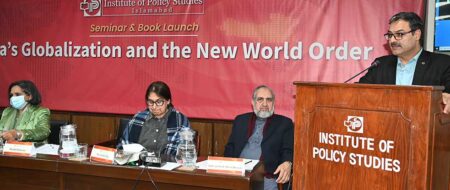
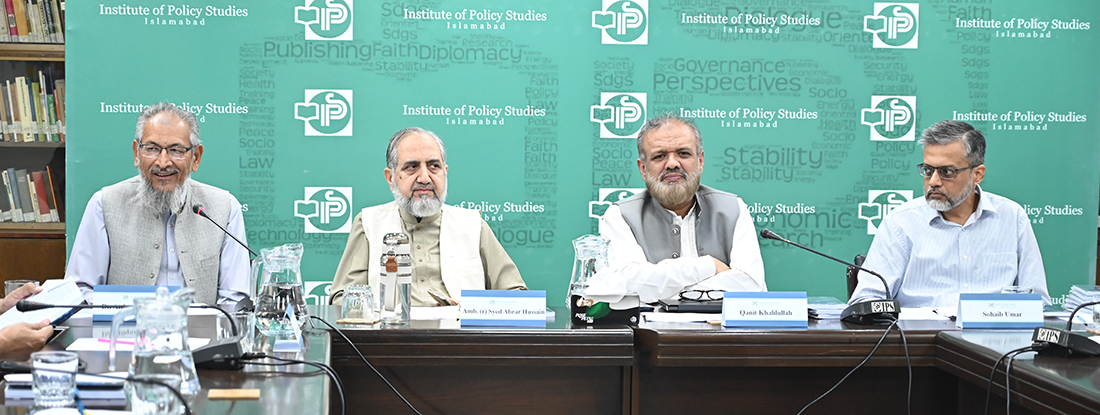
These views were discussed at the launch of “Breaking the Trap of Debt, Inflation, Interest and Poverty,” organized by the Institute of Policy Studies (IPS) on June 5, in collaboration with Policy Research Initiative for Zakat-Based, Interest-Free Economy (PRIZE). The book is authored by Qanit Khalilullah and Sohaib Umar, both of whom have extensive experience in Pakistan’s financial sector.
The authors argued that the existing debt-based monetary system enables commercial banks to create the majority of money through lending. According to them, this process contributes to recurring inflation, growing public and private debt, concentration of wealth, and financial instability. They maintained that while money creation through private lending has become standard practice, it often transfers risks to society while concentrating benefits within the financial sector.
As an alternative, the book advocates a transition to a full-reserve banking system under which money creation would become a sovereign function of the state. The proposed model separates deposit-taking from investment activities and seeks to strengthen financial stability while reducing structural inflation and debt pressures. The authors also contend that such a framework would be more consistent with the principles of Islamic finance.
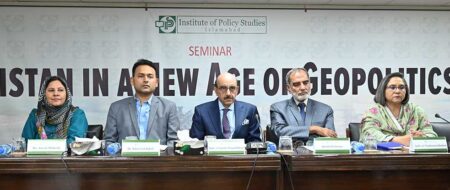
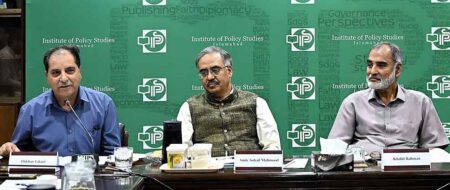
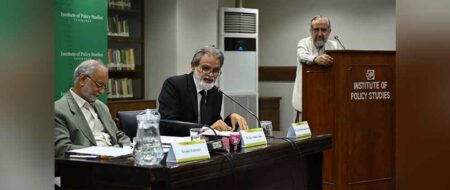
The event brought together economists, policymakers, bankers, academics, and Shariah scholars. The participants included Ambassador (r) Syed Abrar Hussain, Vice Chairman IPS; Prof. Dr. Tahir Mansoori, former vice president of IIUI and Shariah Advisor to Askari Bank; Ahmad Wasim, former head of NIBAF-SBP; and Dr. Salman Syed Ali, former lead researcher at the Islamic Development Bank.
Participants appreciated the authors for presenting an alternative perspective on the economic challenges and argued that there is a need for broader engagement with policymakers and regulators. The consensus was that meaningful progress requires challenging established assumptions and encouraging open debate on Pakistan’s economic future.