Eroding compliance with humanitarian law highlights need for stronger role of religious communities, say experts
The increasing disregard for international humanitarian law (IHL) in contemporary conflicts is prompting renewed calls to strengthen ethical frameworks and expand the role of religious communities in upholding humanitarian principles. Experts stressed that religious traditions — particularly Islamic teachings — offer valuable guidance for protecting human dignity, regulating conduct during war, and ensuring accountability.
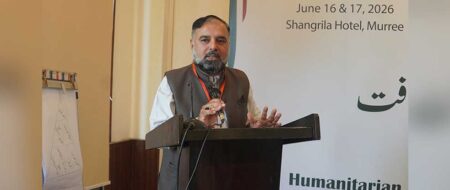
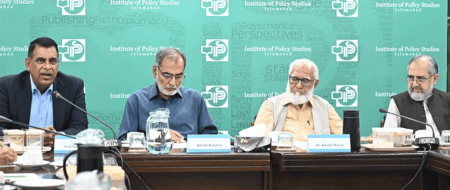
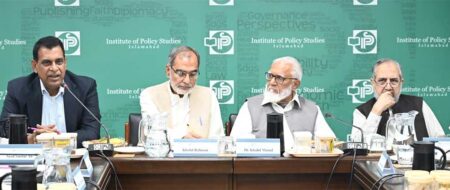
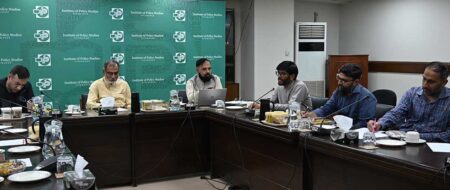
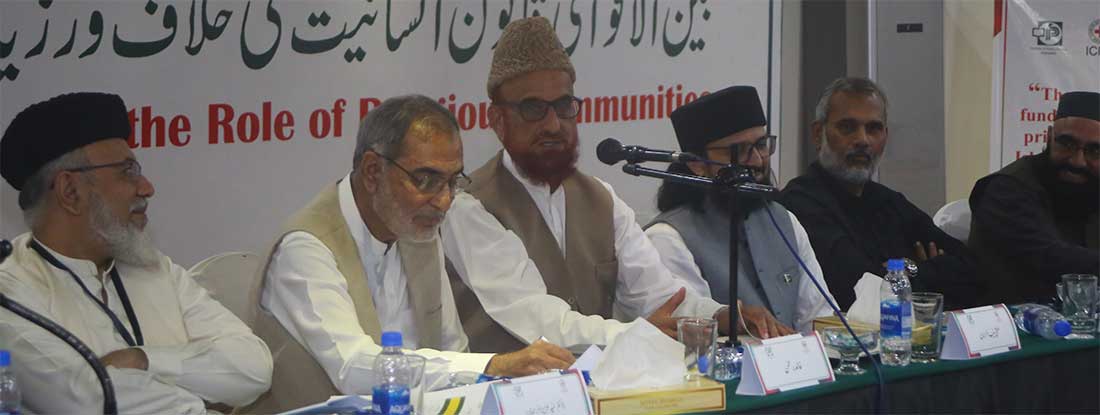
The aforementioned observations were discussed at a conference titled “Eroding Compliance of IHL and the Role of Religious Communities,” jointly organized by the Institute of Policy Studies (IPS) and the International Committee of the Red Cross (ICRC) in Karachi on April 28. The event convened scholars, religious leaders, practitioners, and civil society representatives to examine the challenges confronting IHL implementation and explore how faith-based actors can contribute to reinforcing humanitarian norms.
Participants comprised prominent religious scholars, academics, humanitarian workers, lawyers, and media practitioners, including Mufti Munib ur Rahman (President, Tanzeem-ul-Madaris Ahl-e-Sunnat Pakistan); Mufti Abdur Rahim (President, MUI); Prof. Dr. Anis Ahmad (Vice Chancellor, Riphah International University); Dr. Mohsin Naqvi (scholar); Dr. Nigar Sajjad Zaheer (researcher, writer, and historian); Dr. Umair Mahmood Siddiqui (Patron-in-Chief, COKIRI); Dr. Hafiz Muhammad Sani (Dean, Department of Arabic and Islamic Studies, FUUAST); Khalid Rahman (Chairman, IPS); and Dr. Ziaullah Rahmani (Regional Advisor on Islamic Law and Jurisprudence, ICRC).
Discussions in the opening session pointed to a visible rise in violations of established norms governing armed conflict, particularly in recent global crises. Speakers highlighted the need to align legal mechanisms with moral and religious values to improve compliance with humanitarian standards.
In his keynote address, Prof Dr Anis Ahmad examined the underlying causes of declining adherence to humanitarian principles and urged greater engagement from Muslim societies in promoting ethical conduct during conflicts. He emphasized that religious frameworks could serve as a powerful complement to international legal systems.
The conference also explored the intersections between IHL and Islamic traditions, particularly the concept of Siyar — Islamic international law — as a framework for regulating wartime conduct. Speakers discussed key principles such as the protection of civilians, religious figures, and places of worship, alongside the humane treatment of prisoners and other non-combatants. The role of religious education in building awareness of humanitarian norms and encouraging social harmony was also underscored.
In the second session, participants focused on practical strategies for enhancing compliance with IHL in contemporary settings. They stressed the importance of religious leaders and faith-based organizations in advocating humanitarian values, especially in times of crisis. The discussion also covered the contributions of welfare organizations in conflict zones, challenges faced by media professionals in reporting armed conflicts, and concerns regarding the protection of medical personnel and infrastructure.
Speakers noted that improved institutional coordination and broader public awareness are essential for strengthening adherence to humanitarian standards.
Khalid Rahman observed that the conference was part of IPS’s continued efforts to promote dialogue on pressing global issues, linking classical ethical traditions with contemporary policy frameworks and contributing to a more informed discourse on humanitarian law and practice.
Concluding the conference, participants called for sustained intellectual and policy engagement to address the erosion of respect for IHL. They emphasized the need to integrate ethical, legal, and religious perspectives to develop more effective and contextually relevant responses to humanitarian challenges.