Changing global order creates new opportunities for Pakistan-Russia strategic cooperation, IPS seminar concludes
The gradual emergence of a multipolar international order and shifting regional dynamics are creating new opportunities for Pakistan and Russia to expand cooperation beyond historical constraints. As geopolitical alignments continue to evolve, both countries are increasingly exploring pragmatic engagement in energy, trade, connectivity, defense, and regional stability. Analysts believe that sustained institutional dialogue and broader economic and academic collaboration will remain essential for developing a stable and long-term bilateral partnership.
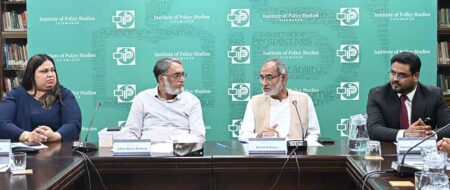
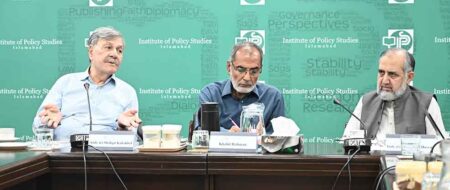
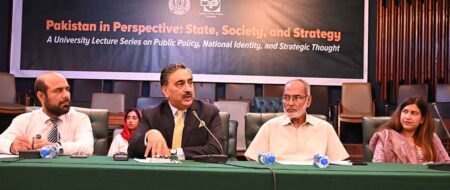
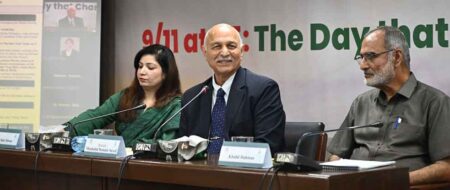
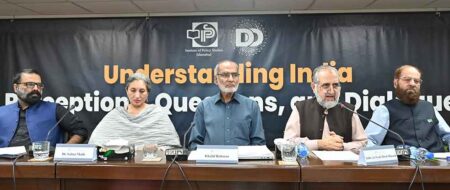
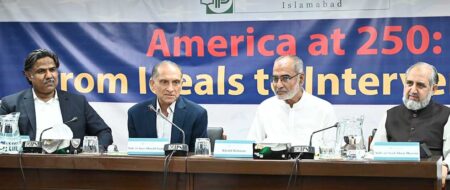
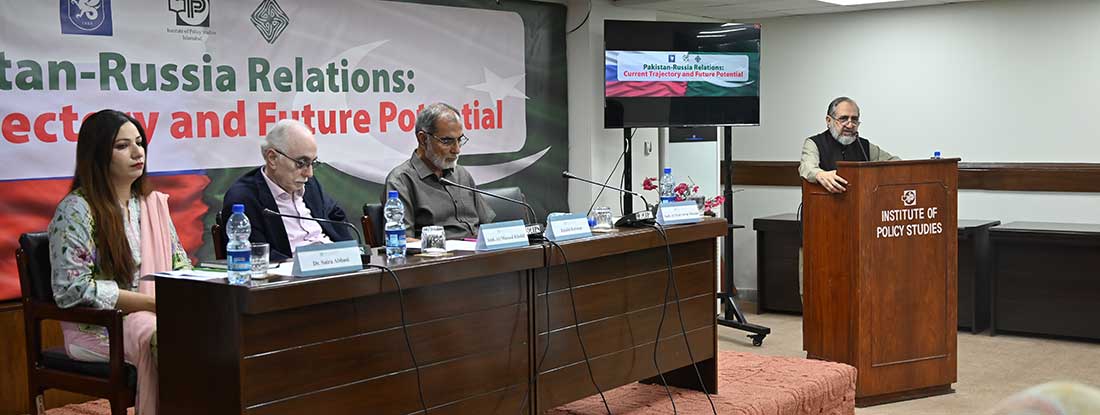
The aforementioned observations were highlighted during a seminar titled “Pakistan-Russia Relations: Current Trajectory & Future Potential” held at the Institute of Policy Studies (IPS) as part of the 2nd Russian-Pakistani International Conference jointly organized by the Federal Urdu University of Arts, Science and Technology (FUUAST), Islamabad, and Kazan Federal University, Russia.
Speakers included Khalid Rahman, chairman IPS; Ambassador (r) Syed Abrar Hussain, vice-chairman IPS; Ambassador (r) Masood Khalid, former ambassador to China; Dr. Saira Nawaz Abbasi, associate professor at Bahria University; and Taimur Fahad, research associate at ISSI.
Discussing the evolution of bilateral relations, Ambassador (r) Masood Khalid observed that Pakistan-Russia ties had historically been shaped by Cold War rivalries and regional security concerns. Referring to the Afghan conflict and the 1971 Indo-Soviet Treaty, he noted that these developments deepened mistrust between the two countries for decades. However, he maintained that changing regional realities and shifting strategic priorities have gradually encouraged both states to move toward cautious but meaningful engagement. He also stressed the need for stronger cooperation in trade, energy, education, media, culture, and security, alongside enhanced high-level exchanges and operationalization of barter trade mechanisms.
Addressing the economic dimensions of the relationship, Dr. Saira Nawaz Abbasi stated that Pakistan-Russia relations are currently passing through a “transitioning phase” shaped by the global movement toward multipolarity. She noted that the energy cooperation, including discounted Russian crude oil imports, refinery modernization, and LNG cooperation, has become a central pillar of bilateral engagement. Referring to the role of the Shanghai Cooperation Organisation (SCO), she said both countries are expanding collaboration in economic integration, regional stability, and counterterrorism through multilateral platforms. She further emphasized the importance of institutionalized economic mechanisms, banking cooperation, infrastructure development, and greater private-sector engagement.
Taimur Fahad observed that although Russia’s South Asia policy remains closely connected with India, it is no longer exclusively India-centric. He noted that Russia’s engagement with Pakistan is increasingly influenced by pragmatic regional considerations, including Afghanistan, Eurasian connectivity, counterterrorism, energy security, and defense cooperation such as the Druzhba military exercises.
Ambassador (r) Syed Abrar Hussain highlighted growing cooperation in infrastructure, energy, defense, and multilateral forums, such as the SCO.
Khalid Rahman, in his concluding remarks, stressed the importance of trust-building, intellectual engagement, and continued academic interaction for strengthening long-term bilateral understanding and cooperation.