Mapping Pakistan’s Energy Sector
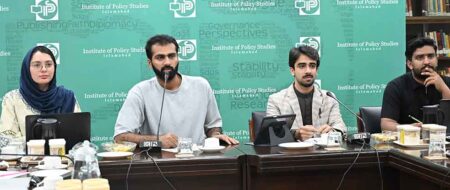
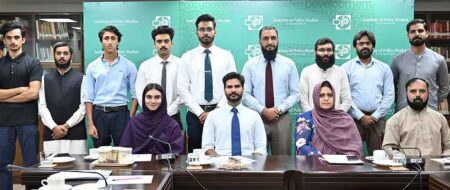
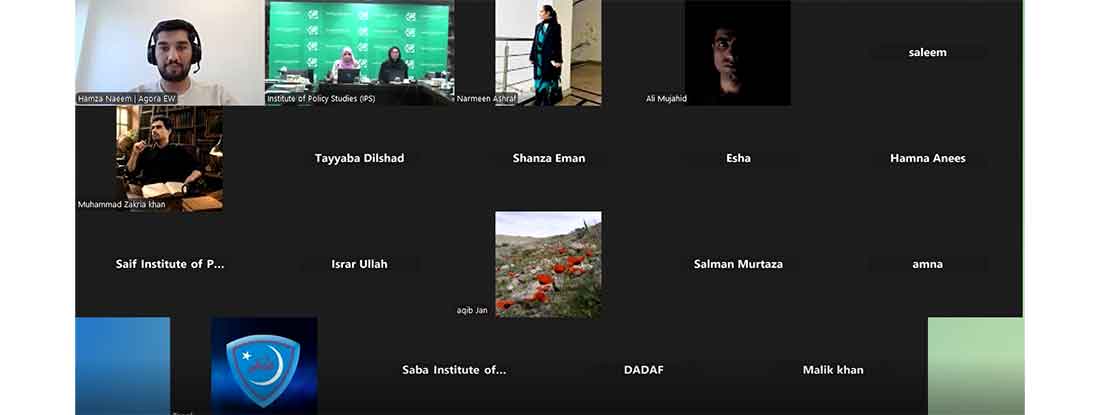
The Institute of Policy Studies (IPS), Islamabad, organized an online session on October 19, 2026, titled “Mapping Pakistan’s Energy Sector” under its Digital Advocacy Program, featuring Hamza Naeem, Project Manager, Electronics, at Agora, as the guest speaker. The session provided participants with an overview of Pakistan’s energy landscape, institutional framework, policy challenges, and emerging opportunities in the energy transition.
In her opening remarks, Faryal Qazi, Research Officer, IPS, highlighted the interconnected nature of Pakistan’s energy sector, encompassing generation, transmission, distribution, pricing, regulation, and consumption. She observed that challenges such as coordination gaps, governance issues, financial sustainability, affordability, and circular debt could not be understood in isolation. She explained that the session was organized to provide participants with a comprehensive understanding of the sector and connect various developments and reform initiatives within a broader policy framework.
Moderating the session, Saba Maarif, Assistant Manager, Outreach, IPS, facilitated the discussion and encouraged participants to engage with the speaker on the institutional, economic, and policy dimensions of the energy sector.
In his presentation, Hamza Naeem explained that energy is not merely an economic sector but an essential input to national development, influencing industrialization, commercial activities, and household welfare. He divided Pakistan’s broader energy landscape into three interconnected domains: electricity, oil and gas, and energy demand. He also discussed the importance of balancing affordability, energy security, environmental sustainability, economic development, and equitable access.
Providing an overview of the institutional framework, he explained the restructuring of the power sector following the unbundling of WAPDA in the 1990s and outlined the respective roles of the Ministry of Energy, NEPRA, OGRA, National Grid, distribution companies, and other sectoral institutions. He also discussed independent power producers (IPPs), capacity payments, and the factors contributing to electricity tariffs and circular debt.
Addressing contemporary challenges, Naeem highlighted rising electricity costs, dependence on imported fuels, capacity obligations, infrastructure limitations, and the growing adoption of rooftop solar systems. He explained that the rapid expansion of consumer-led polarization had created both opportunities and challenges for the existing grid infrastructure and financial sustainability of distribution companies.
He also examined ongoing reforms, including the transition towards competitive electricity markets, distribution company privatization, and the modernization of transmission and distribution infrastructure. Emphasizing the need for a forward-looking policy approach, he suggested that Pakistan should better integrate consumer-installed solar capacity into the national energy system while strengthening institutional coordination and stakeholder engagement.
During the interactive discussion, participants raised questions about privatization, IPP agreements, coal utilization, renewable energy integration, and the future direction of energy policies. The session concluded with an emphasis on coordinated policymaking, institutional collaboration, and balancing consumer interests with the financial and operational requirements of the energy sector.