Ideological Chaos and Muslim Families
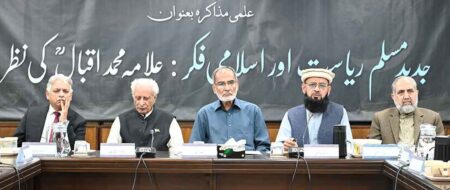
Speakers at a seminar stressed that Muslim families today face growing intellectual, social, and cultural challenges shaped by globalization, digital connectivity, and rapidly changing social realities. They said a holistic approach, grounded in a sound Islamic worldview, spiritual and moral development, compassion, and contextual understanding, is essential to help younger generations stay connected to their faith and tradition while navigating contemporary realities. Responding to individual questions about religious practices or family arrangements is not enough.
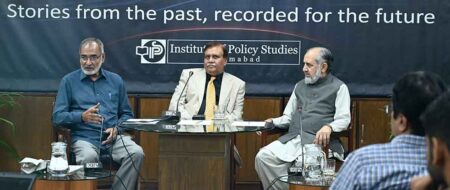
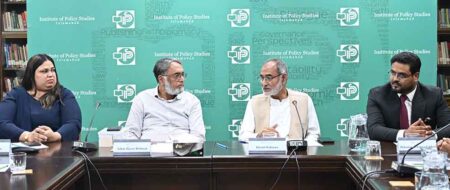
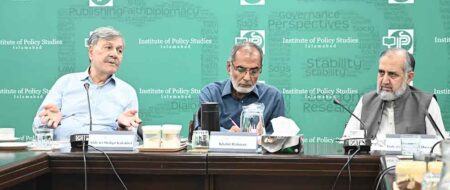
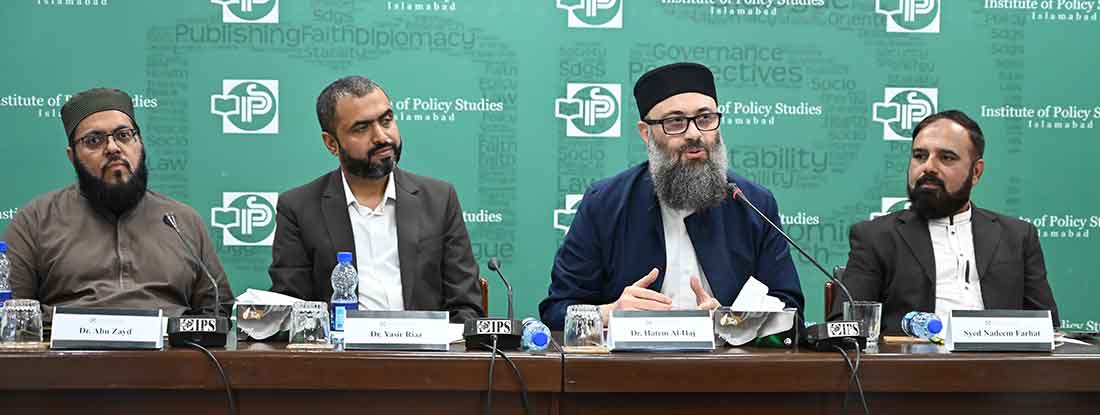
This was discussed at a talk titled “Ideological Chaos and Muslim Families,” organized by the Institute of Policy Studies (IPS), Islamabad, in collaboration with the Pakistan Islamic Medical Association (PIMA).
The session featured Dr. Hatem al-Haj, an Egyptian-American jurist and author, who delivered the keynote address, and Dr. Abu Zayd, founder and director of the Quran Literacy Institute. Syed Nadeem Farhat, research fellow, IPS, moderated the session, while Dr. Yasir Riaz delivered the concluding remarks.
Dr. Hatem al-Haj said the challenges facing Muslim families in Western and Eastern societies are increasingly interconnected because of globalization and the extensive influence of online spaces. Addressing ideological confusion, he argued, requires moving beyond a piecemeal approach that focuses on individual religious rulings or on comparing Islamic teachings with contemporary laws. Families must first establish a strong Islamic worldview by engaging with the fundamental questions of human existence: where people come from, why they are here, and where they are ultimately going.
He stressed that children should be intellectually and spiritually grounded in the core principles of faith, so that they can approach later questions and challenges with clarity and confidence. Parents must also demonstrate Islamic values through their conduct. A family’s religious environment should reflect mercy, understanding, and openness, particularly when children raise questions shaped by experiences and exposure different from their parents’.
Dr. al-Haj also highlighted the importance of tajdeed, or renewal, explaining that it involves both restoring the essential principles of faith and understanding how they apply to changing circumstances. He emphasized the need to distinguish between enduring religious principles and matters that may require contextual interpretation.
Discussing changing family dynamics, he observed that women’s expanding educational and economic opportunities have transformed traditional household arrangements, raising questions that Muslim scholars and communities need to address thoughtfully. Family responsibilities, he said, should be approached through fairness and mutual consideration rather than rigid expectations. The broader responsibility of sustaining Muslim families rests not only with individual households but also with communities, scholars, intellectuals, jurists, and leaders.
In his concluding remarks, Dr. Yasir Riaz observed that globalization and greater access to information have intensified the challenges Muslim families face, particularly in raising younger generations. Emphasizing the need for a holistic approach, he noted that families must nurture Islamic values not only through authoritative guidance but also through everyday practices.
The discussion also addressed the influence of social media personalities on young Muslims, the distinction between Islamic teachings and cultural practices, joint-family arrangements, and the need for clarity in marital agreements. Dr. al-Haj cautioned against abrupt changes that could create generational tensions and stressed the importance of communicating religious guidance prudently and sensitively while remaining anchored in tradition. He added that marriage calls for graciousness and mutual consideration alongside the fulfilment of mutual rights and obligations.