Call for Accessible, Culturally Rooted ADR Mechanisms in Pakistan
Pakistan needs to develop accessible, credible and culturally grounded mechanisms for Alternative Dispute Resolution (ADR) instead of relying solely on legislative frameworks, experts said at a seminar organized by the Institute of Policy Studies (IPS) in collaboration with School of Advocacy and Research (SAR) and Aman Council for Amicable Dispute Resolution on September 29, 2026.
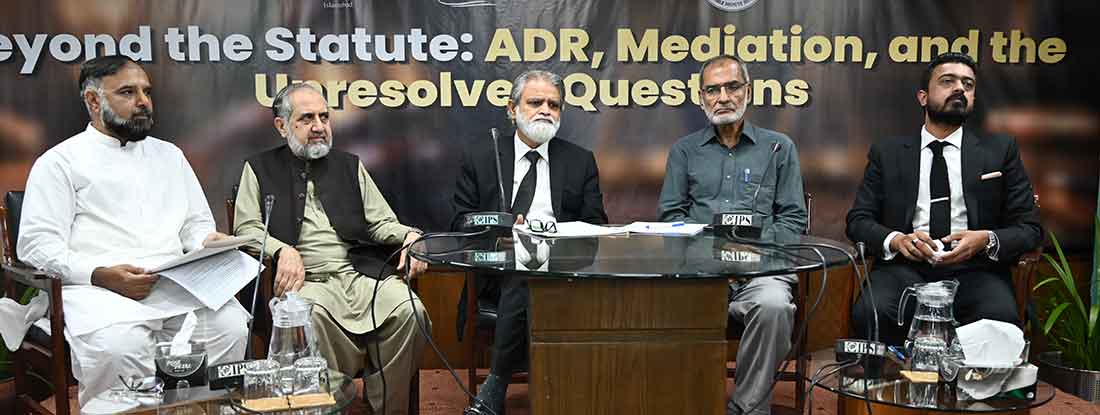
The seminar, titled “Beyond the Statute: ADR, Mediation and Unresolved Questions,” examined the institutional, educational and regulatory challenges affecting ADR in Pakistan, while highlighting the relevance of Islamic and indigenous traditions of mediation.
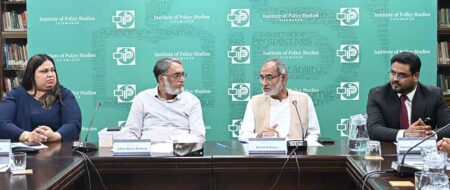
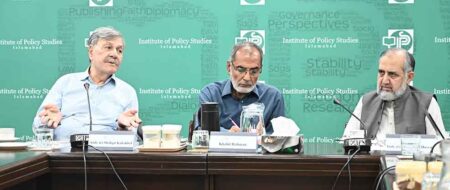
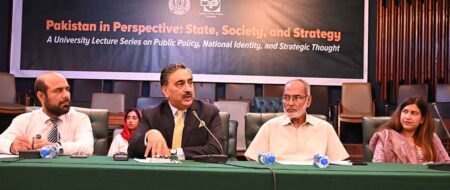
The speakers included Justice Dr. Syed Muhammad Anwer, judge, Federal Shariat Court; Khalid Rahman, chairman, IPS; Amb. (r) Syed Abrar Hussain, vice chairman, IPS; Shujaullah, executive director and founding member, SAR; and Syed Abdullah Anwar, advocate and IPS associate. Misbah Shahid, director of the Aman Council, moderated the session.
In his opening remarks, Amb. (r) Abrar Hussain said legislation by itself could neither ensure effective dispute resolution nor build public confidence in ADR. He called for accredited ADR centers, transparent procedures, stronger mechanisms for enforcing settlements, inclusion of ADR in legal education, and wider participation by social and institutional stakeholders.
Delivering the keynote address, Justice Dr. Syed Anwer proposed viewing ADR as “appropriate dispute resolution” rather than simply an alternative to formal courts. He emphasized impartiality, ethical conduct and confidence-building, while drawing attention to Islamic traditions of reconciliation.
Justice Anwer also stressed the importance of proper training and accreditation for mediators and called for greater participation of women, particularly in resolving family disputes. He further encouraged collaboration between think tanks and ADR organizations to develop practical models suited to Pakistan’s context.
Shujaullah outlined the country’s existing ADR framework, covering arbitration, negotiation, conciliation and mediation. Referring to the Arbitration Act 1940, ADR Act 2017 and Pakistan’s international commitments, he also traced dispute-resolution practices to Islamic tradition. He noted that the prolonged and expensive nature of litigation had increased the relevance of ADR, particularly where disputing parties were willing to reach mutually acceptable settlements.
From a practitioner’s perspective, Abdullah Anwar identified court interference, fragmented legislation, procedural uncertainty, a shortage of accredited practitioners and limited public awareness as key obstacles. He also linked effective ADR with investor confidence and economic activity and highlighted the importance of gender-sensitive and Shariah-conforming mediation.
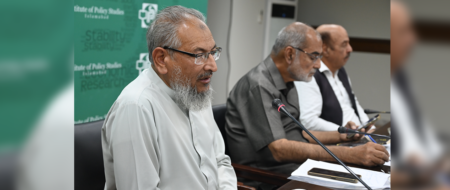
Khalid Rahman emphasized that Pakistan already possesses social traditions of resolving disputes through trust, community relationships and informal institutions. Referring to practices in markets, neighborhoods, families and mosques, he argued that formal ADR mechanisms should remain connected to indigenous ethical and social values. He also stressed the need to address the underlying causes of disputes rather than focusing exclusively on their settlement.
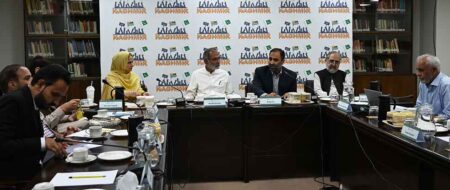
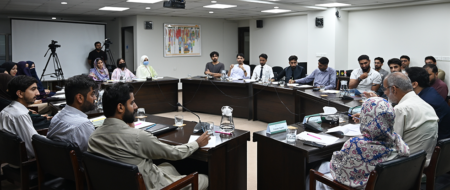
A panel discussion titled “Structuring the Future of Mediation in Pakistan” further examined mediation education, professional accreditation, court-annexed mediation and the role of lawyers and other professionals. Participants cautioned against developing an elite-centric ADR system and emphasized greater recognition of Pakistan’s indigenous dispute-resolution practices.
The panel comprised Prof. Dr. Hafiz Aziz ur Rehman, chairman, Intellectual Property Organization Pakistan; Dr. Ghazala Ghalib Khan, assistant professor, Faculty of Shariah and Law, International Islamic University Islamabad; Qaiser Imam, advocate, Supreme Court, chairman SAR; Usman Jillani, partner, ABS & Co, Islamabad; and Auf Abdul Rehman, managing director, SAR.