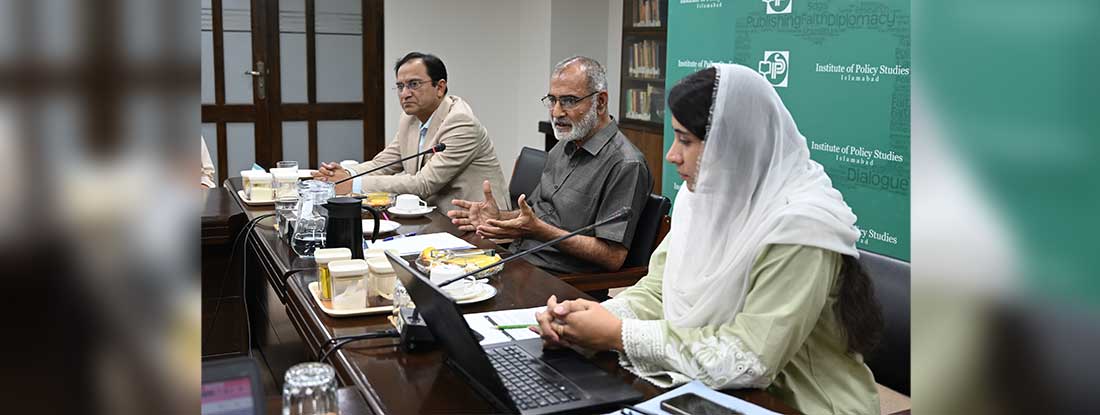
Governance reforms, consumer-centric approach critical to DISCO privatization: IPS roundtable
Sustainable reform of Pakistan’s electricity distribution sector requires governance-driven policies, regulatory certainty, and a consumer-centric approach rather than reliance on privatization alone. As the country pursues reforms in selected distribution companies (DISCOs) while addressing the challenges of rooftop solar expansion and circular debt, experts emphasized that lasting improvements will depend on stronger institutions, effective regulation, and accountability mechanisms that protect consumer interests.
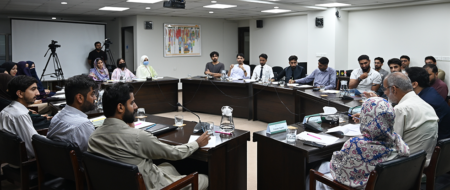
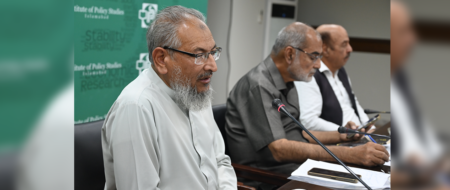
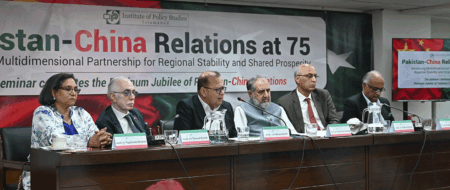
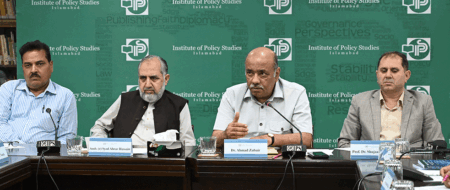
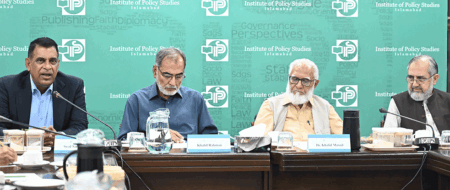
These observations were shared during a roundtable discussion titled “Reimagining Pakistan’s Distribution Sector: Privatization, Solarization, and Circular Debt,” organized by the Institute of Policy Studies (IPS), Islamabad, on July 9. The event brought together policymakers, regulators, utility professionals, economists, academics, and energy experts to examine the future of Pakistan’s electricity distribution sector.
Key speakers included Afia Malik, senior researcher; Muhammad Asim Ejaz, chief engineer (O&M), IESCO; Imtiaz Hussain Baloch, director general (Licensing), NEPRA; and Khalid Rahman, chairman, IPS. The discussion also featured Rehan Javed, convener, Energy Advisory Committee, FPCCI; Dr. Naveed Arshad, director, LUMS Energy Institute; Dr. Syed Ali Abbas Kazmi, head of department, USPCAS-E, NUST; Shahid Mehmood, senior economist; Muhammad Yasir Hussain, energy expert; and Ammar Yasir, IPS associate.
Opening the discussion, Afia Malik argued that privatization is neither a necessary nor a sufficient condition for improving DISCO performance. She maintained that professional management, independent boards, operational autonomy, sound governance, and regulatory certainty are more important than ownership alone, noting that publicly owned utilities can also perform efficiently under the right institutional framework.
Muhammad Asim Ejaz outlined the government’s privatization process for IESCO, GEPCO, and FESCO, noting that feasibility studies had been completed before expressions of interest were invited. While acknowledging employees’ concerns over job security, he observed that international experience shows privatization should be judged by its implementation rather than by the concept itself.
Imtiaz Hussain Baloch described privatization as a positive step, citing K-Electric’s improvements in reducing losses, strengthening regulatory compliance, and enhancing service delivery. He argued that similar reforms in public distribution companies have long been overdue.
Khalid Rahman observed that Pakistan’s electricity distribution sector has reached a critical stage where reforms are indispensable. He emphasized that no single governance model offers a universal solution and stressed that ongoing privatization should ultimately be assessed through the lens of consumer welfare, effective regulation, and improved service delivery.
Participants broadly agreed that governance and management deficiencies remain the sector’s primary challenges. They also highlighted the financial pressures created by the rapid expansion of rooftop solar, particularly through grid defection by high-paying consumers. Speakers underscored the need for stronger measures against electricity theft, a more robust regulatory and institutional framework, and reform strategies designed to improve governance, attract capable investors, and enhance consumer welfare. They concluded that privatization should remain a means to strengthen the electricity sector rather than an end in itself.