Humanitarian journalism must uphold the principles of impartiality, dignity and non-discrimination: IPS-ICRC workshop
Humanitarian crises are becoming increasingly complex, prolonged, and difficult to cover, requiring journalism that goes beyond reporting events and statistics to focus on the experiences, dignity, and needs of affected populations. As conflicts, displacement, climate-related emergencies, and access restrictions continue to reshape humanitarian landscapes, the role of the media in informing the public responsibly while avoiding harm has become more critical than ever.
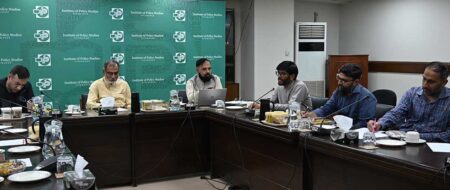
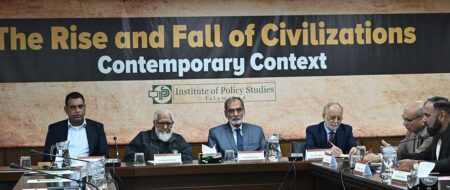
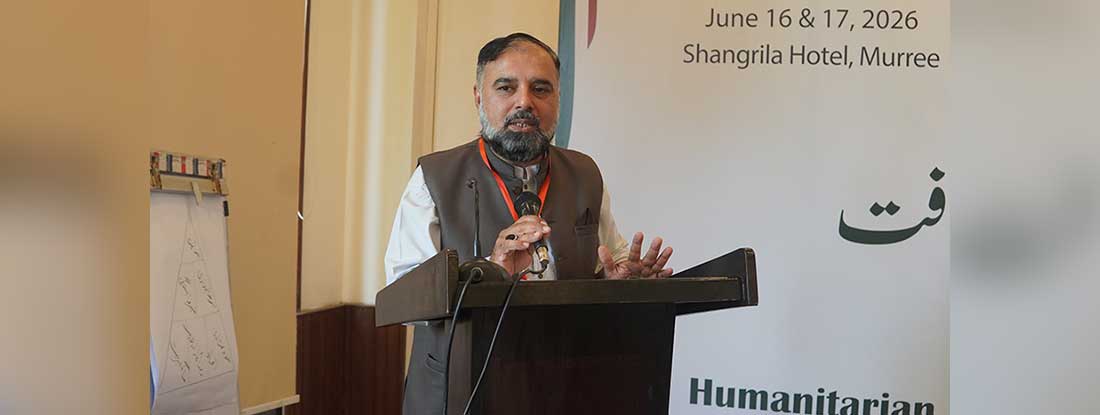
These themes were highlighted during an advanced-level workshop on “Humanitarian Journalism During Armed Conflict and Emergencies” organized jointly by the Institute of Policy Studies (IPS), Islamabad, and the International Committee of the Red Cross (ICRC) in Murree on June 16 and 17. The workshop brought together editors, writers, and religious media content creators to examine international humanitarian law (IHL), humanitarian action, journalistic ethics, and the role of religious media in crisis reporting.
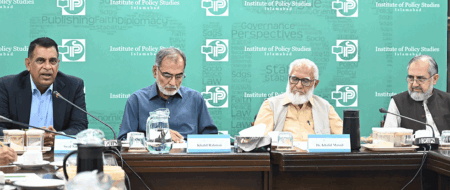
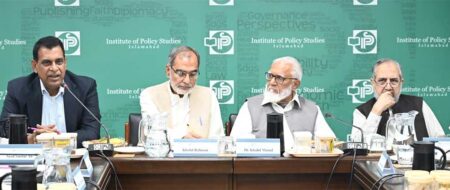
The workshop was inaugurated by Syed Nadeem Farhat, a research fellow at IPS, in the presence of IPS Chairman Khalid Rahman. Dr. Ziaullah Rahmani, regional ICRC advisor on Islamic law and jurisprudence, led discussions on the significance of international humanitarian law in addressing contemporary global challenges.
Sessions featured contributions from IHL expert Dr. Saqib Jawad, who introduced participants to the foundations of the international law of armed conflict through an overview of the Geneva Conventions and their Additional Protocols. Senior journalist Tariq Habib discussed the principles and practices of humanitarian journalism during armed conflicts and emergencies, while senior humanitarian practitioner Umair Hasan examined operational challenges faced by humanitarian organizations and the role of media institutions in supporting humanitarian action.
Speakers observed that humanitarian emergencies are increasingly characterized by protracted crises rather than short-term disasters, creating new challenges for journalists, humanitarian actors, and affected communities. They noted that despite the continued relevance of international humanitarian law, compliance has weakened in many conflict settings, underscoring the need for greater public awareness and engagement.
Speakers further stressed that humanitarian journalism is anchored in principles of humanity, impartiality, non-discrimination, accuracy, dignity, consent, privacy, and the obligation to “do no harm.” Journalists, they noted, must carefully verify information, avoid sensationalism, protect vulnerable groups, and ensure that reporting does not contribute to trauma, stigma, or insecurity. The importance of safety protocols and hostile-environment preparedness for reporters working in conflict zones was also highlighted.
Participants also discussed the evolving nature of humanitarian action, observing a growing shift from relief-focused responses toward resilience-building approaches centered on localization, inclusion, trust, digital innovation, mobile cash assistance, and community-led response mechanisms.
An interactive group discussion on humanitarian principles and Islamic ethics encouraged participants to connect insights from religious scholarship with contemporary humanitarian discourse. The workshop also featured a practical training component, during which participants developed journalistic content on a range of humanitarian issues.
In his concluding remarks, Dr. Ziaullah Rahmani emphasized that humanitarian journalism is both a professional and moral responsibility grounded in respect for human dignity and social obligation. He urged participants to apply the knowledge gained through the workshop to promote responsible reporting and contribute to a more informed and compassionate media environment during times of crisis.
The workshop formed part of the longstanding collaboration between IPS and ICRC aimed at promoting humanitarian principles, strengthening informed public discourse, and enhancing the capacity of religious media professionals to report conflicts and emergencies with accuracy, balance, and sensitivity.