Pakistan emerges as key middle power amid shifting global security order: IPS roundtable
The changing global security environment and growing geopolitical uncertainty are creating greater diplomatic space for middle powers to contribute to regional and international stability. As traditional power structures face increasing strain, countries with balanced foreign policies and credible diplomatic outreach are gaining relevance in conflict management and strategic mediation. For Pakistan, this evolving landscape presents an opportunity to strengthen its role as a constructive middle power in an emerging multipolar order.
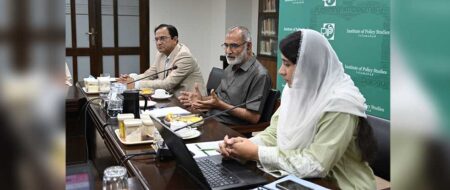
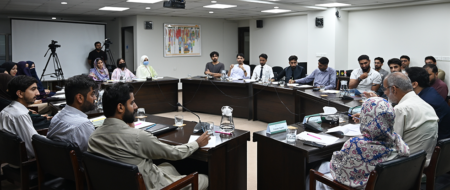
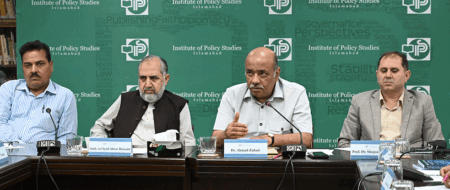
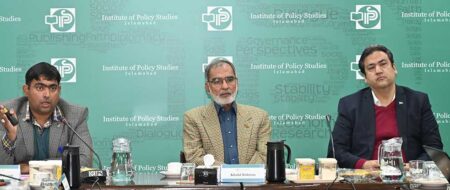
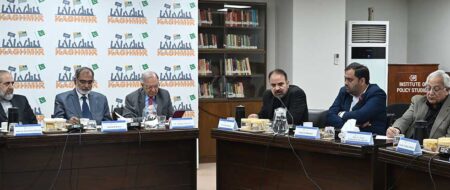
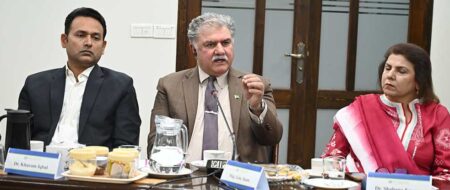
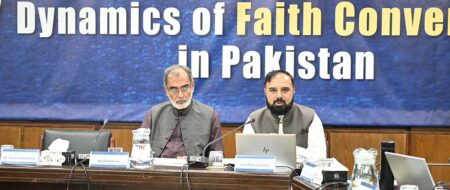
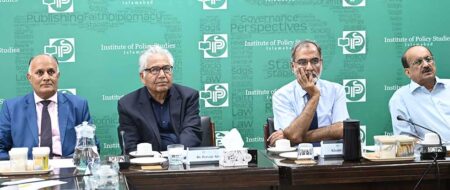
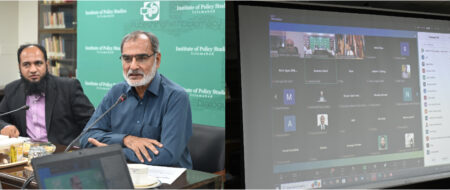
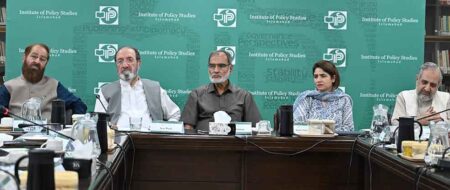
This was highlighted during a roundtable discussion on the Iran-US ceasefire and Islamabad Talks, organized by the Institute of Policy Studies (IPS), Islamabad, on April 15. The event featured a keynote address by former foreign secretary Ambassador (r) Aizaz Ahmad Chaudhry.
Speakers included Khalid Rahman, chairman IPS; Ambassador (r) Syed Abrar Hussain, vice-chairman IPS; Salman Javed, executive director South Asia Times; Brigadier (r) Said Nazir; Brigadier (r) Tughral Yamin; Dr. Waleed Rasool, executive director IDDDS; Dr. Saira Nawaz of Bahria University; and Arhama Siddiqua, research fellow at ISSI.
Speakers observed that recent US engagement with Iran reflected both domestic political pressures and external strategic constraints influencing Washington’s decision-making. Electoral considerations and institutional limitations, particularly within military circles, were cited as factors restricting the scope of escalation and encouraging diplomatic engagement.
The discussion noted that while diplomatic contacts had generated momentum, no durable agreement had yet emerged. Core disputes remain centered on Iran’s nuclear program, the strategic importance of the Strait of Hormuz, and the continuation of economic sanctions. Iran’s demands for sanctions relief, release of frozen assets, and compensation were described as key issues complicating negotiations.
Participants emphasized that the wider Middle East is witnessing shifting alliances and recalibrated priorities, with states reassessing strategic positions in response to new threats and opportunities. At the same time, longstanding rivalries continue to shape the crisis, making an immediate resolution unlikely.
Discussants outlined three possible scenarios: a negotiated settlement ensuring regional stability and uninterrupted energy flows; a prolonged phase of indirect confrontation leading to sustained instability; or a middle path involving limited concessions by both sides to reduce tensions without resolving underlying disputes.
Speakers maintained that a new security order is gradually emerging in which middle powers are becoming increasingly relevant through diplomacy and strategic balancing. This transition reflects the broader rise of multipolarity in global affairs.
In his concluding remarks, Khalid Rahman said Pakistan is on a positive trajectory following the Islamabad Talks and should capitalize on its growing middle-power status to play a constructive regional and global role.