Gaza Ceasefire Proposal: Understanding Hamas’ Response
Hamas’ response to the ceasefire proposal stems from a quest to end Gaza’s genocidal suffering, while Israel’s approach remains shaped by security concerns. The evolving global context and renewed diplomatic pressure may, however, reopen pathways toward a political flexibility, ceasefire, and the two-state solution.
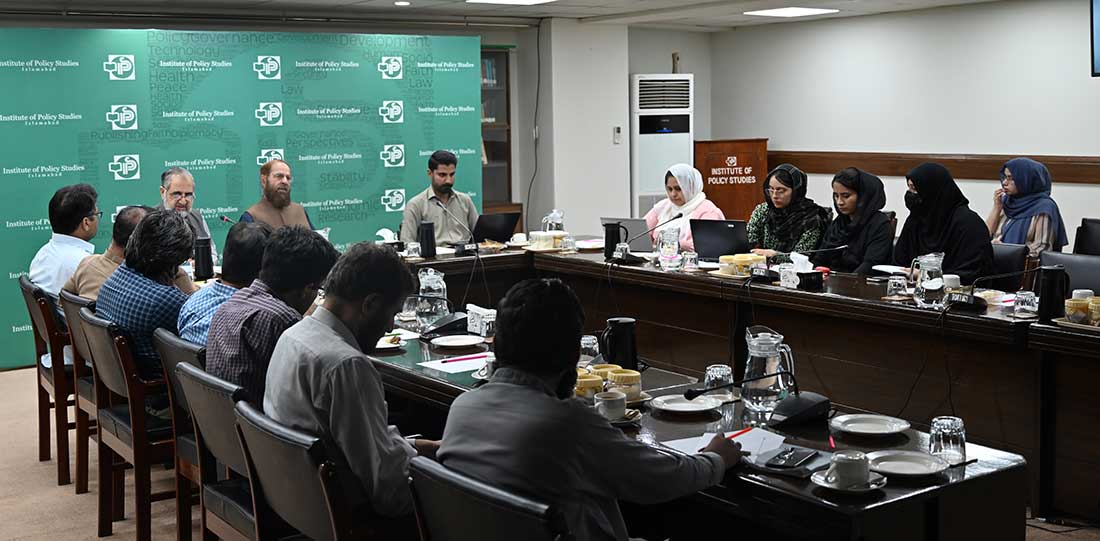
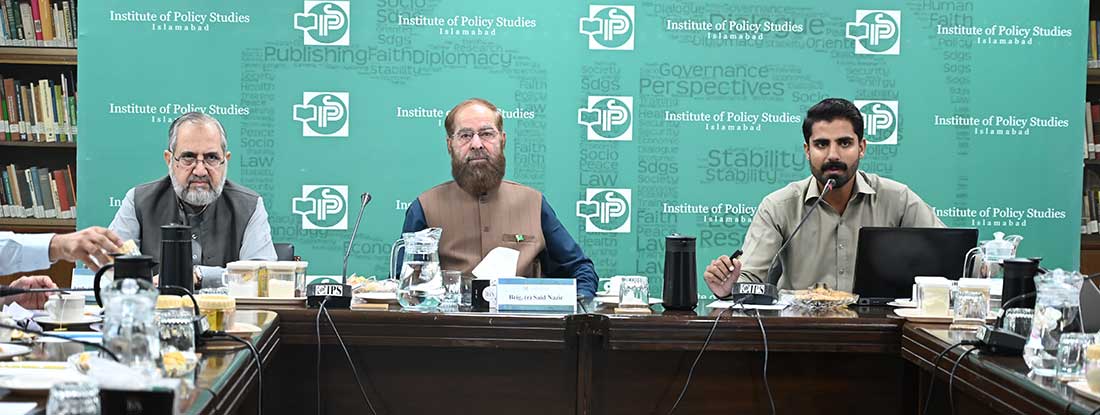
This was discussed during an in-house meeting titled “Gaza Ceasefire Proposal: Understanding Hamas’ Response,” on October 07, 2025. The session was addressed by Ambassador (r) Syed Abrar Hussain, Vice Chairman IPS, and Brig. (r) Said Nazir, senior IPS Associate. The discussion sought to unpack Hamas’ reaction to the ceasefire proposal announced by Donald Trump on September 29, 2025.
The speakers traced the origins of Hamas to the period following the PLO’s recognition of Israel and its subsequent support for a political settlement to the Palestine-Israel conflict. They observed that although Hamas’ operational capacity has significantly declined over the past two years, its ideological resolve remains intact. Drawing parallels with the historical endurance of the Akhwaan-ul-Muslimun, the speakers noted that Hamas, as an ideological movement, cannot be eradicated entirely.
Participants agreed that the Palestine-Israel conflict remains deeply complex, with the international community showing heightened interest in recent developments from varying perspectives. The devastation and loss of life in Gaza over the past two years have created widespread fatigue and a desire to end the ongoing violence. This changing context could potentially prompt greater flexibility from both sides in negotiations.
From Israel’s perspective, the decision to consider the ceasefire proposal is influenced by multiple factors: growing global criticism, the Global Sumud Flotilla, a stalled Abraham Accords process, and mounting outrage over the IDF’s indiscriminate genocidal attacks in Gaza. However, Israel’s approach continues to be security-centric, as reflected in the composition of its negotiation delegation in Egypt, which is dominated by defense and intelligence officials rather than political representatives.
For Hamas, the driving motivation behind engaging with the proposal lies in halting Israeli aggression and genocide and offering Palestinians temporary relief after years of relentless bombardment and psychological trauma.
As the situation remains fluid, a definitive resolution is still uncertain. Nevertheless, the 20-point proposal presented by Donald Trump serves as an initial framework for possible negotiations. Both Hamas and Israel are expected to seek amendments to these points. Meanwhile, Türkiye, Qatar, and Egypt are likely to play pivotal roles in ensuring that any agreement maintains a sense of balance and mutual respect, avoiding perceptions of capitulation. The speakers also highlighted Trump’s assertive diplomatic posture, suggesting that he may adopt an equally firm stance toward Israel to preserve the credibility of the deal.
Discussing the future of the two-state solution, it was noted that under Prime Minister Netanyahu’s leadership, Israel remains unlikely to accept such an arrangement. However, following recent recognitions of Palestine by several Western nations, rejecting the two-state framework may become increasingly untenable for Israel. Should a change in Israeli leadership occur in the next elections, prospects for reviving the two-state solution could improve, marking a potential turning point in the long-standing conflict.