Military Stand-off and Quick De-Escalation: What Next for India and Pakistan
General
In the backdrop of the Pahalgam false flag operation, India claimed that a Pakistan-based terrorist organization sponsored the attack and immediately announced a string of punitive actions against Pakistan. The most threatening and alarming is suspending the crucial water-sharing treaty, the Indus Waters Treaty (IWT) of 1960.
Pakistan immediately denied any involvement in the attack, expressed grief over the killing of innocent people, and condemned the loss of life. Pakistan also proposed the establishment of an independent forum to conduct a formal investigation into the incident and expressed its complete willingness to cooperate with the inquiry. Meanwhile, Pakistan’s diplomatic corps also approached the key capitals and requested them to play their role in defusing the situation. However, India disregarded both Pakistan’s proposals and the recommendations of its allies, showing no willingness to engage constructively on the matter.
In response to India’s unwarranted actions, Pakistan, during a high-level meeting of the National Security Committee (NSC), decided to implement a series of retaliatory measures. These included shutting down ground links and restricting airspace access to Indian commercial flights. The decision also hinted that Pakistan reserves the right to abrogate the Shimla Agreement, if required. These decisive steps signal Pakistan’s firm stance on the matter.
The next step on the escalation ladder
Following a pre-planned strategy, Indian Prime Minister Narendra Modi, a rogue actor, took decisive actions to escalate the crisis, exerting sustained pressure on Pakistan and impacting its strategic posture. In an unexpected turn of events, on the night of May 6-7, 2025, India launched a formidable aerial operation, deploying as many as 125 fighter jets, giving it a significant numerical advantage and carried out airstrikes on civilian areas within Pakistan, resulting in over 26 fatalities and injuries to more than fifty innocent people. These developments unfolded as Modi pursued policies aimed at shaping a favorable political environment in India, intending to secure success in the six major state elections scheduled between November 2025 and June 2026, and in the process, also crippling Pakistan’s economy which is right on track.
Following the attack on civilian areas, Pakistan responded in self-defense. Pakistan Air Force (PAF) pilots intercepted Indian fighter jets, including French-made Rafale aircraft, successfully downing five fighters, three of which were Rafale, causing significant concern within India’s political and military leadership. The Pakistani response was unexpectedly swift, drawing global attention, including from Western powers.
However, after failing to achieve its intended objectives, the Modi regime got frustrated and launched a series of drone strikes against civilian targets on May 7-8, 2025. Pakistan’s air defense system successfully neutralized approximately 90 percent of these threats, minimizing collateral damage. Reports suggest that India, potentially in coordination with Israel, faced setbacks due to the underperformance of advanced drones used in the offensive. Despite these challenges, India remained confident in its ability to escalate the situation further, anticipating limitations in Pakistan’s capacity to counter continued offensives.
The Pakistan military, backed by strong national support, maintained a clear stance and strategic approach in response to India’s actions. The Director General of Inter-Services Public Relations (DG ISPR), Lt. General Ahmed Shareef Chaudhry, firmly stated that Pakistan would retaliate for the loss of innocent lives. However, he emphasized that the timing and targets of such actions would be determined at Pakistan’s discretion.
Meanwhile, the Government of Pakistan took the extraordinary step of delegating full authority to the armed forces, granting them complete operational freedom to respond to India’s aggression. This unprecedented decision effectively empowered the military leadership to shape Pakistan’s course of action without political interference. While some speculated that this delegation of authority could potentially extend to the consideration for a possible use of tactical nuclear weapons, however, it is opined that such measures were not part of immediate strategic planning because, conventionally, Pakistan has a strong battle-hardened force to respond and even defeat India’s ground forces without involving its nuclear factor.
It is viewed that, despite the statements signaling retaliation, the Pakistan Army may have opted for restraint, while recognizing the challenges of managing public sentiment and civil society expectations. However, India’s actions significantly limited Pakistan’s ability to de-escalate. On the night of May 9-10, 2025, Indian forces conducted air-to-surface missile strikes on key Pakistani airbases, including Nur Khan, Shorkot, and Murid, escalating tensions further. According to statements by the DG ISPR, India also launched missiles into Afghanistan, a move perceived as an attempt to destabilize the broader region and push it closer to conflict.
Hence, in response to escalating tensions, the Pakistan Army launched a large-scale counter-operation named ‘Operation Bunyan-ul-Marsoos’ (Iron Wall). Utilizing a coordinated strategy involving ground and air forces, the operation targeted key sites across India. Pakistani missile strikes reportedly hit airbases in Gujarat, Adampur, and Jalandhar. A notable aspect of the operation was the Pakistan Air Force’s successful deployment of JF-17 Thunder jets, which destroyed India’s advanced S-400 air defense system in Adampur. Additionally, the Indian military intelligence training center in Rajouri, alleged to have been involved in planning covert operations against Pakistan, was neutralized. Furthermore, the BrahMos missile storage facility in Beas was eliminated in the initial phase of the operation, marking a significant development in the unfolding conflict.
De-escalation move
Pakistan’s response to India’s actions was unprecedented, catching New Delhi off guard. It is believed that even the US and its Western allies were unprepared to believe that Pakistan could demonstrate such outstanding precision and military proficiency. Despite the unfolding crisis, the US initially observed the developments with little urgency. In a surprising statement, US Vice President James David Vance asserted that America does not want involvement in the Indo-Pakistan conflict, as it does not align with American national interests. Meanwhile, CNN journalist Nic Robertson revealed that Pakistan’s decisive countermeasures placed India at a strategic disadvantage, compelling New Delhi to urgently pursue US mediation to de-escalate the situation.
Ultimately, through the combined diplomatic efforts of Saudi Arabia, Turkey, Iran, and the US, India agreed to a ceasefire, averting a potentially catastrophic escalation. US President Donald Trump remarked that the failure to implement a ceasefire could have resulted in the loss of thousands of innocent civilian lives on both sides of the border. He also subtly suggested that the ongoing hostilities had approached a dangerous threshold, raising concerns over the possibility of nuclear conflict between the two nuclear-armed nations. Meanwhile, throughout the two weeks of escalation from April 22, 2025, to May 10, 2025, while other friends of Pakistan and India maintained a conscious and careful stance, China and Turkey remained steadfast in their support for Pakistan, reinforcing their strategic alignment amidst the unfolding crisis.
The current ceasefire appears to be a temporary arrangement that primarily benefits India. Given its historical precedents, one might anticipate that if Modi remains in command of India’s armed forces as prime minister, a similar crisis could arise within the next two years, potentially escalating into a full-scale conflict. Preventing such an outcome requires proactive measures and strategic foresight. The international community should therefore play a critical role in fostering stability by encouraging both India and Pakistan to build upon existing agreements and engage in meaningful dialogue. Through sustained diplomatic efforts, the two nations can work toward resolving their long-standing disputes in a peaceful and lasting manner, ensuring regional security and stability.
Who achieved what?
An objective evaluation of the outcome of the current escalation can provide valuable insights, leading to strategic recommendations aimed at fostering lasting peace in the region. The following sections outline the short- and long-term impacts, along with the potential consequences of the ongoing conflict between the two nations:
Short-term outcome and impacts
Both India and Pakistan have something to lose and something to gain. A brief analysis is as follows:
Where does India stand?
It is argued that in the short term, India stands as the loser internationally and domestically. While Modi may have to pay a heavy price politically, overall, India has failed to project itself as a regional bully. These small skirmishes, which took place between India and Pakistan, have put their men and equipment to the test, and the outcome amicably proved that the Pakistani side remained far ahead of India in all aspects, including military training, morale, and the equipment used in the current combats. The outcome of these brief scuffles indicates that India’s armed forces, especially its air force and ground forces, have been embarrassed, and their morale and confidence levels have gone down. It will take quite some time to regain their lost image, domestically and internationally.
Moreover, India also badly failed in selling its ill-planned Pahalgam false flag operation to the world community. A timely disclosure of the Indian intelligence’s fake plan to involve Pakistan in Pahalgam’s planned incident also exposed India at the international level. It may not be wrong to claim that this was the worst-planned activity by the Indian intelligence, which not only embarrassed and isolated New Delhi diplomatically but also damaged its credibility internationally as a democratic country. It would be difficult for the Modi regime to engineer such stories in the future. It has also put the Modi government on the back foot domestically, and the opposition parties led by the Congress have the opportunity to take full advantage of the present situation and build on the narrative to throw the present fascist regime out of parliament.
Where does Pakistan stand?
In the short term, Pakistan is perceived to have achieved both domestic and international success. On the global stage, Pakistan effectively presented its case, garnering goodwill and diplomatic support from various nations. The world community, including the US, its Western allies, and Russia, refrained from endorsing India’s position, instead urging New Delhi to abandon unverified claims and engage in collaborative efforts with Pakistan to resolve mutual challenges.
Domestically, the incident reinforced Pakistan’s unity, enabling the nation to present a resolute and unwavering front. Since 1998, this marks one of the rare moments when the country has stood together with the strength of a steel wall, demonstrating firm determination to counter any aggression, whether from India or elsewhere.
Unlike previous instances, Pakistan did not adopt an apologetic stance in response to India’s claims. Instead, it chose a decisive approach, responding in kind if hostilities were initiated. This strategic posture was executed effectively, solidifying Pakistan’s position on the global stage and reaffirming its commitment to safeguarding national interests.
The Pakistan Army has long demonstrated exceptional training and operational expertise, particularly in counterterrorism efforts. Once again, it has reaffirmed its capability and unwavering determination to defend Pakistan against any threats, including potential aggression from India, showcasing its resilience and strategic preparedness.
On the international stage, Pakistan has reinforced its position as a nation with a highly trained and well-equipped military, showcasing advanced weaponry and strategic preparedness. This demonstration has signaled Pakistan’s readiness to counter any potential aggression effectively.
The ongoing crisis has offered the Pakistan Army a crucial opportunity to evaluate its operational capabilities, including equipment efficiency, training effectiveness, and overall strategic readiness. This assessment has enabled the military to refine its preparedness, address existing gaps, and enhance its resilience for future engagements. By identifying and rectifying current shortcomings, the Pakistan Army will reinforce its operational effectiveness. Acknowledging the temporary nature of the ceasefire, the military remains committed to strategic planning and long-term preparedness, ensuring the protection of Pakistan’s supreme national interests in the face of potential future conflicts.
Domestically, the Pakistan Army, having faced sustained pressure and criticism for some time, has reasserted its credibility as a highly organized and well-trained military force. It has successfully restored public confidence by demonstrating an unwavering commitment to its mission. Through strategic planning and sustained investment, the army has ensured that every contribution from the nation is efficiently utilized to fortify the country’s defense capabilities. This commitment to resource optimization reinforces national security and strengthens the military’s preparedness for any challenges ahead.
Pakistan’s nuclear capability, coupled with the impressive performance of its air force, air defense systems, extensive missile inventory, advanced drone technology, and robust jamming and cyber capabilities, underscores the depth of investment made to enhance national security. The recent crisis and its aftermath have further solidified the Pakistan Army’s standing, both within the country and on the global stage. Its demonstrated preparedness, strategic capability, and resilience have reinforced its reputation as a formidable military force.
Another significant outcome of the recent stand-off with India has been the Pakistan Army’s ability to deliver a decisive message to terrorist groups operating in Balochistan that there is no safe place within Pakistan for them, as the military and intelligence agencies remain fully capable of tracking and neutralizing threats anywhere within the country. Similarly, the developments have also sent a strong signal to Tehreek-e-Taliban Pakistan (TTP), emphasizing the necessity of peaceful surrender to law enforcement agencies and integration into a stable national framework – failure to comply would result in decisive action against them.
Additionally, the outcome of the limited war has reinforced the morale and operational confidence of Pakistan’s law enforcement agencies, including the police, Rangers, and the Frontier Corps in both Khyber Pakhtunkhwa and Balochistan, further strengthening their resolve and commitment to national security.
During the two-week conflict, countries such as China, France, Israel, and Russia have closely monitored the unfolding events and assessed their strategic implications. India deployed advanced French-made Rafale fighter jets, Israeli drones, and Russia’s S-400 air defense system, while Pakistan countered with its jointly developed JF-17 Thunder and Chinese-supplied J-10CE aircraft in high-stakes aerial engagements. In both the short and long term, these nations will continue to evaluate the performance of their military technologies, refining and enhancing their capabilities based on operational insights gained from the conflict.
Long-term outcome and impact
As the battle subsided and the fog of war cleared, Pakistan claimed to have successfully downed five Indian Air Force jets, including three of its highly regarded Rafale fighters. The unexpected outcome reverberated through global military circles, raising critical discussions about modern warfare capabilities. Pakistan’s reliance on Chinese fighter jets, missile systems, radar, and electronic warfare technologies proved effective, reinforcing its defense posture. This development is expected to remain a key strategic focus for China, the US, its Western allies, and Russia as they continue to evaluate their military technologies within the evolving regional dynamics. Ongoing assessments will likely drive advancements, shaping future defense strategies and capabilities in response to emerging security challenges.
On May 10, India and Pakistan reached an agreement for a full and immediate ceasefire. However, the abrupt nature of this decision, lacking a clearly defined roadmap for future diplomatic engagement, raises concerns about its stability. Sporadic cross-border fire along the Line of Control (LoC) may persist, posing an ongoing threat to civilians’ lives, particularly on the Pakistani side. These unannounced hostilities in this region could escalate tensions, potentially leading to a renewed conflict between the two nations. As a result, the security and future of over 1.66 billion people of this region remain uncertain until both sides commit to substantive dialogue and a comprehensive resolution of their long-standing disputes.
One might argue that Pakistan faces significant long-term challenges based on the current scenario. While India has agreed to a ceasefire, it has simultaneously introduced a new strategic complication by announcing its intention to abrogate the IWT. This move has effectively expanded India’s leverage in future negotiations. Given the prevailing tensions, India may be unlikely to adopt a pragmatic approach toward negotiations with Pakistan unless key international stakeholders engage sincerely in the process and assume a mediating role to facilitate constructive dialogue.
Kashmir and water remain two parallel and equally significant issues for Pakistan in the ongoing dispute. By introducing water into the equation, India has created an additional challenge for Pakistan to navigate. If India persists in its rigid stance and ultimately moves to abrogate the IWT, effectively cutting off Pakistan’s water supply, Islamabad may have no choice but to respond decisively. In such a scenario, Pakistan could be compelled to treat water and the Kashmir issue as interconnected strategic concerns, necessitating a comprehensive and firm approach to safeguard its national interests.
Looking ahead, if such tensions persist over the next 15 years, there is a risk that diplomatic interventions may falter, leaving the international community unable to prevent further escalation. At that critical juncture, the stakes could become dangerously high, with Pakistan potentially resorting to drastic measures, regardless of the catastrophic consequences of a nuclear conflict.
Conclusion and the suggested way forward
In the 21st-century environment, war is not a solution to the ongoing problems between nations. In the contemporary era, the world has witnessed that the US, with state-of-the-art technology duly supported by 44 countries of the world, including the most advanced countries such a Britain, France, and Germany, fought for 18 long years, the longest war in the history of mankind, against a few thousand fighters in Afghanistan but failed to find a military solution to the problem. The world has witnessed that the US was once again badly embarrassed after its premature withdrawal from Vietnam in 1973. Currently, Russia and Ukraine are at war, which commenced on February 22, 2022, and there seems to be no possibility of a military solution to the issue.
Drawing on historical precedents, one can conclude that all unresolved global conflicts – including the disputes over water and Kashmir between India and Pakistan – must be addressed peacefully through dialogue. Achieving the end goal is possible, provided both sides demonstrate sincerity and actively cultivate mutual trust.
To foster stability in the region, both nations should build upon existing agreements and take concrete steps toward initiating a comprehensive dialogue process. Through sustained, peaceful engagement, they can work toward resolving their long-standing disputes in a manner that benefits both parties. As a gesture of goodwill, India should immediately announce the restoration of the IWT, reinforcing its commitment to equitable cooperation and regional harmony.
Nevertheless, Pakistan must remain clear-eyed about the reality that Modi’s regime is unlikely to act rationally in the future as well. Given his track record, one can anticipate that by the end of this year or early next year, he may craft yet another narrative, pressuring his military to escalate tensions with Pakistan. Given this possibility, the Pakistan Army must remain vigilant and proactively prepare for any emerging crisis. It is essential to critically assess its current performance, identify weaknesses in planning, training, and equipment, and address these shortcomings without delay. Strengthening preparedness now will ensure a more effective response to potential provocations in the future.
The incident has reinforced Pakistan’s unity, enabling the nation to present a resolute and united front. This determination must remain steadfast over time. Any weakening of this resolve could embolden India to either reinforce its past failures or explore alternative strategies to instigate a new crisis, potentially undermining Pakistan’s stability and steadily progressing economy. A steadfast commitment to these principles will ensure resilience against external threats and contribute to long-term stability and economic progress.
India and Pakistan must acknowledge that water scarcity poses a significant challenge for both nations. As stewards of the Indus River System (IRS), they share a collective responsibility to ensure its sustainable management, allowing both countries to thrive for generations without forcing either side to compromise its rightful water share.
Glaciers, the primary source of the IRS, are crucial for maintaining the region’s water balance. However, multiple factors – including militarization – could accelerate their melting much earlier than anticipated. This would lead to devastating downstream effects, beginning with flooding and ultimately resulting in severe drought. To ensure the long-term sustainability of water resources in the subcontinent, India and Pakistan must take immediate steps toward demilitarizing the region. This proactive measure would help preserve vital water sources, mitigate environmental risks, and foster cooperation for the greater benefit of their populations.
Pakistan cannot rely solely on existing arrangements to address its growing water scarcity. Even if the IWT remains intact, it provides India with significant leverage to maximize the use of the three rivers allocated to Pakistan. To mitigate future water crises, Pakistan must proactively develop a backup plan that includes both short- and long-term solutions, as frequently discussed at national forums. Without politicizing the issue, the country should urgently initiate the construction of an additional eight to ten small and large dams. These initiatives would be instrumental in capturing rainwater and regulating monsoon-season overflow, contributing to the long-term sustainability of water resources for future generations.
Provinces must also actively contribute to addressing water-related challenges by formulating independent plans for the construction of appropriately sized dams tailored to their specific needs. This strategic approach will enhance regional water management and support long-term sustainability. Sindh and Balochistan, in particular, have the unique advantage of providing clean drinking water to major cities like Gwadar, Karachi, and Hyderabad by installing desalination plants. Implementing such initiatives would alleviate the burden on the provincial governments of Sindh and Balochistan, ensuring a more sustainable and efficient approach to water management.
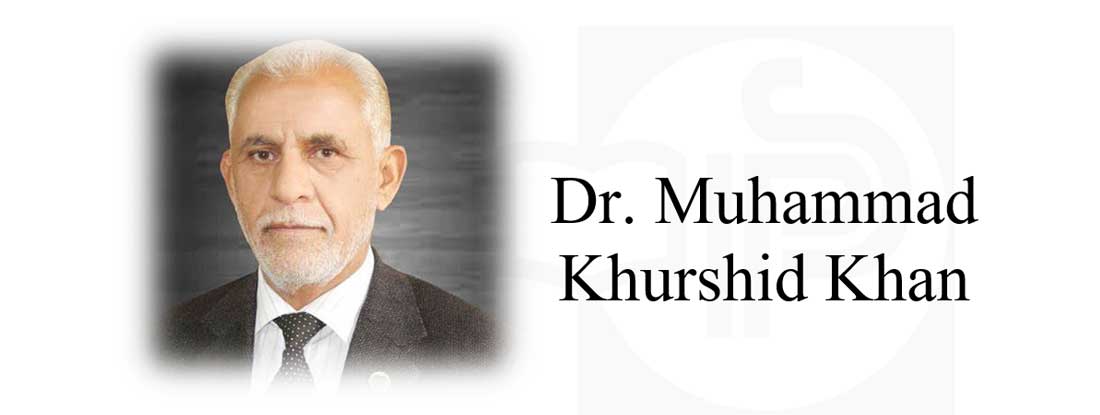
Muhammad Khurshid Khan SI (M) is a retired brigadier of the Pakistan Army and a fellow at the Stimson Center, Washington, D.C. He holds an MSc in Defence and Strategic Studies from QAU, Islamabad, and a PhD in IR from NDU, Islamabad. He served for five years in the Strategic Plans Division (SPD) in the Arms Control and Disarmament Affairs (ACDA) Directorate, and for three years at ISSRA, NDU, in multiple leadership roles. He has authored numerous works on national and strategic affairs.