Towards an Equitable Energy Transition in Pakistan: Immediate Priorities and Long-Term Measures
Pakistan’s energy transition must go beyond expanding renewable energy to address affordability, financial sustainability, industrial competitiveness, and equitable access to its benefits, experts said. They noted that power-sector challenges are interconnected and called for coordinated reforms that tackle immediate concerns while setting a long-term roadmap for an equitable, inclusive, and sustainable energy future.
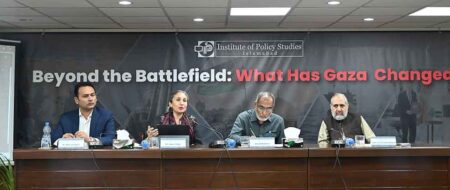
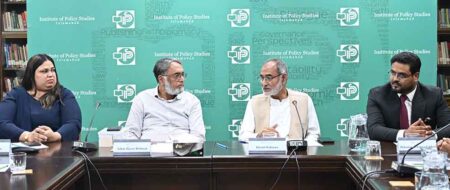
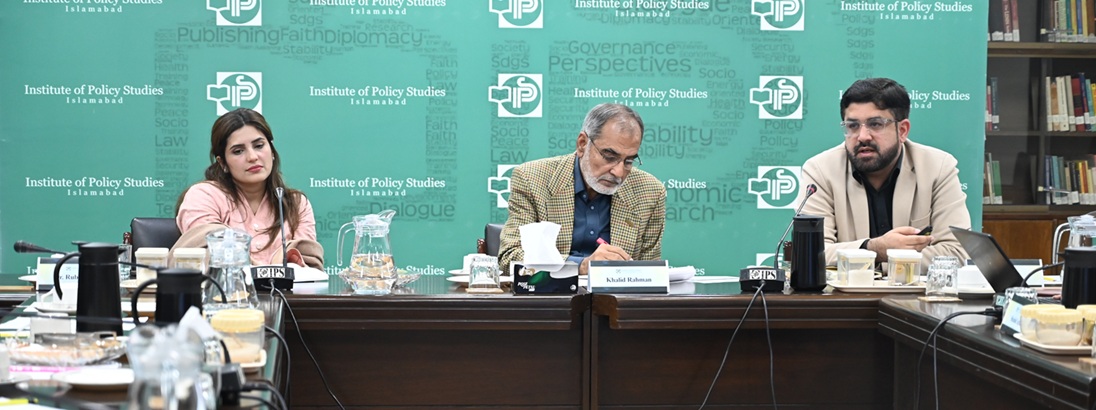
This was discussed at a roundtable organized by the Institute of Policy Studies (IPS), Islamabad, titled “Towards an Equitable Energy Transition in Pakistan: Immediate Priorities and Long-Term Measures.” The discussion brought together policymakers, energy experts, industry representatives, and researchers.
The speakers were Rehan Javed, Member, Federation of Pakistan Chambers of Commerce and Industry; Muhammad Umer Khan, Joint Director, Private Power and Infrastructure Board; Dr. Rubina Ilyas, Research Economist, Pakistan Institute of Development Economics; Ameena Sohail, Member, Board of Governors, CPPA; and Khalid Rahman, Chairman, IPS. The discussants included Shahid M. Sattar, former Member, Energy Planning Commission; Shahid Iqbal, former CEO, IESCO; Asad Mehmood, Senior Energy Expert; Waqas Haroon Moosa, former Chairman, Pakistan Solar Association; Khawaja Hassan Umer, Director, Financial Planning, Power Generation Company (Pvt) Ltd; Tauseef ur Rehman, National Grid Company; Dr. Shakir Ali; and Zulfiqar Younas, Senior Advisor, Climate Finance.
Linking industrial competitiveness with consumer affordability, Rehan Javed pointed to high electricity costs, capacity payments, and underutilized generation capacity as persistent challenges. He called for cost-reflective industrial tariffs, better use of existing capacity, and improved transmission planning to keep industries connected to the grid.
On procurement, Umer Khan underscored least-cost planning, competitive procurement, transparent contracting, and appropriate risk allocation. He noted that market reforms, including the Competitive Trading Bilateral Contract Market, could improve procurement discipline, encourage investment, and reduce inefficiencies.
Turning to households, Dr. Rubina Ilyas highlighted disparities in the ability to participate in the transition: homeowners can install rooftop solar, while tenants and households sharing meters often cannot. She called for targeted support for vulnerable consumers, transparent assessment of tariff impacts, improved DISCO performance, and measures such as energy storage and shared solar arrangements.
Taking a broader view, Ameena Sohail argued that power-sector problems are often addressed in isolation, creating further challenges. She stressed the need to examine the sector holistically and resolve institutional and regulatory disagreements that delay reforms.
During the discussion, Shahid Sattar urged attention to the transition’s effects on households, industrial workers, and host communities of energy projects. Waqas Moosa proposed a midday tariff framework to encourage consumption during peak solar generation while keeping DISCOs revenue neutral. Shahid Iqbal cautioned against blaming net metering primarily for DISCO revenue problems, pointing to weak bill recovery and non-paying consumers. Tauseef ur Rehman observed that solar and battery adoption is shifting peak demand towards nighttime. Shakir Ali called for greater attention to wind energy, while Hassan Umer stressed accelerating renewable development and market reforms. Asad Mehmood said socioeconomic differences must inform transition policy, as not all consumers can afford renewable technologies, and noted solar users’ continued grid dependence and the need for load-shifting technologies. Zulfiqar Younas urged Pakistan to pursue its NDC 2025 commitments and mobilize green finance through multilateral funds, the Green Climate Fund, and carbon markets.
Winding up the discussion, Khalid Rahman observed that successive power-sector interventions had often tried to remedy the consequences of earlier decisions, sometimes creating new challenges. He stressed the need for a comprehensive examination of the sector and coordinated immediate and long-term measures.