Pakistan Needs Diplomacy, Better Water Management to Address Water-Security Challenges: Experts
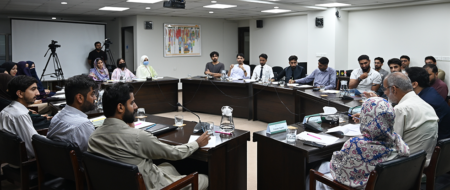
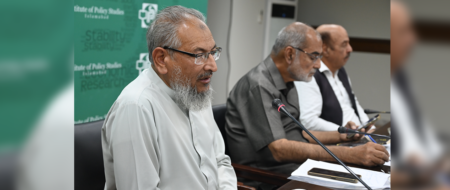
Pakistan needs sustained diplomatic engagement to safeguard its rights under the Indus Waters Treaty (IWT), alongside stronger domestic management of water resources to address growing water-security challenges, experts said at a seminar organized by the Institute of Policy Studies (IPS), Islamabad.30
Titled “Beyond The Hague: Securing Pakistan’s Water Rights and Water Security,” the seminar held on October 1 examined the historical, diplomatic, environmental, and policy dimensions of the IWT and the challenges facing Pakistan’s water interests.
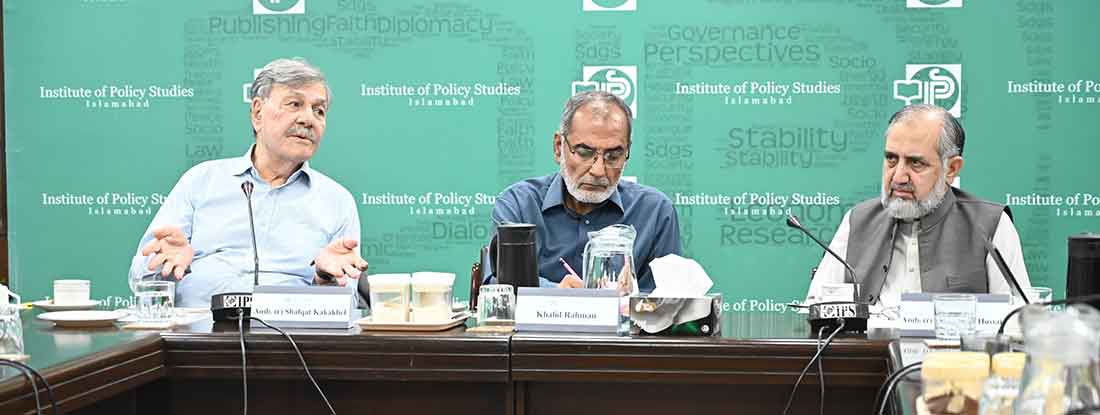
The seminar featured Amb (r) Shafqat Kakakhel, former deputy executive director of UN Environment Program; Dr. Afsah Qazi, assistant professor at the Centre for International Peace & Stability, NUST; Dr. Summera Fahmi Khan, member, UNESCO Chair on Knowledge Systems for Integrated Water Resources Management, COMSATS; Khalid Rahman, chairman, IPS; Ambassador (r) Syed Abrar Hussain, vice chairman, IPS. Faryal Qazi, research officer, IPS, moderated the event.
In his opening remarks, Ambassador (r) Syed Abrar Hussain highlighted the strategic, environmental, and socioeconomic importance of the IWT. He stressed the need to examine the treaty within its broader historical, diplomatic, and policy context.
Delivering the keynote address, Amb (r) Shafqat Kakakhel reviewed the treaty’s origins, current challenges, and future prospects. Describing the IWT as one of the most comprehensive water-distribution agreements of its kind and a “gold standard” for Pakistan, he said India’s efforts to seek changes to the treaty and its non-cooperation with established mechanisms had preceded its April 2025 decision to hold the treaty in abeyance.
He also expressed concern over India’s accelerated development of hydropower projects on the Chenab River, warning that the river valley could become increasingly dominated by dams. He maintained that certain dam designs and infrastructure features were inconsistent with provisions and technical requirements in the treaty’s annexures.
Calling for a measured response, Amb Kakakhel urged Pakistan to continue pursuing diplomacy and cooperation while avoiding provocation. He noted that Pakistan’s efforts extend beyond proceedings at The Hague, with its diplomatic missions presenting the country’s position internationally. He also called for the US and World Bank, as parties involved in establishing the treaty framework, to play an active role in facilitating its resumption.
Dr. Afsah Qazi said India’s refusal to heed the Permanent Court of Arbitration’s decision would not absolve it of its responsibilities. She highlighted the role of soft diplomacy and international attention in complementing formal legal proceedings.
She also stressed that Pakistan must address its own water-management challenges by reducing wastage and improving the use of available resources.
Dr. Summera Fahmi Khan emphasized stronger coordination among institutions dealing with water-related issues. She said available data and knowledge must be translated into coordinated policy and practical action.
Concluding the seminar, Khalid Rahman said the issue surrounding the IWT was fundamentally political as well as related to water security. He stressed that addressing the treaty’s current status would require political goodwill from India, urging Pakistan to pursue both immediate measures and a broader long-term strategy to protect its water interests.