Informed understanding of Constitution, international law vital for Pakistan’s global role: Ahmer Bilal Soofi
Pakistan’s constitutional identity, commitment to international law, and responsibilities in the global arena require informed academic discussion, particularly among the younger generation. A clear understanding of the country’s constitutional foundations, international obligations, and diverse strengths is essential for developing an informed perspective on Pakistan’s role in the contemporary world.
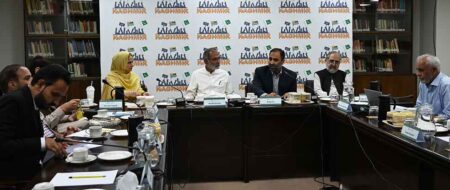
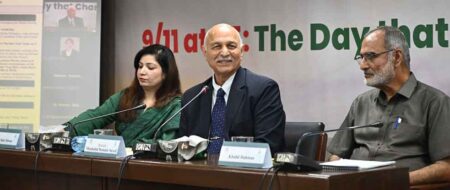
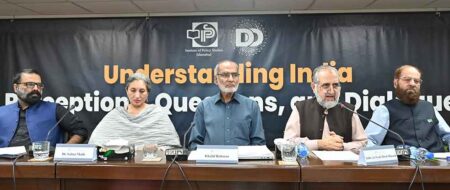
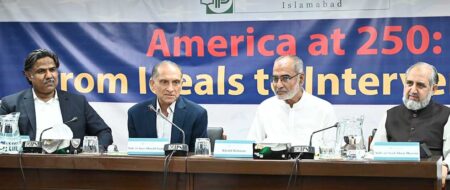
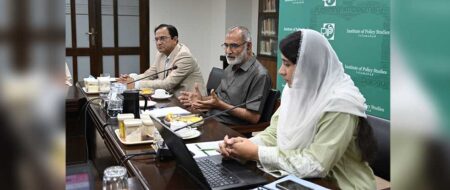
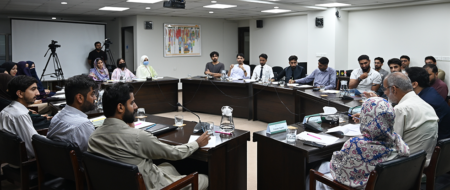
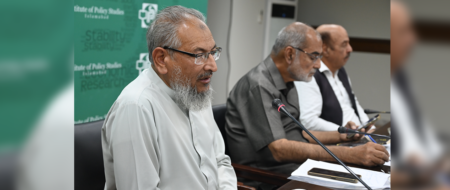
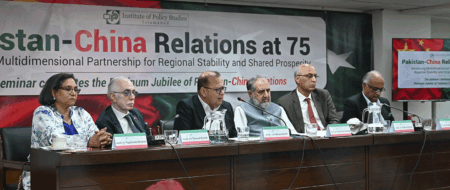
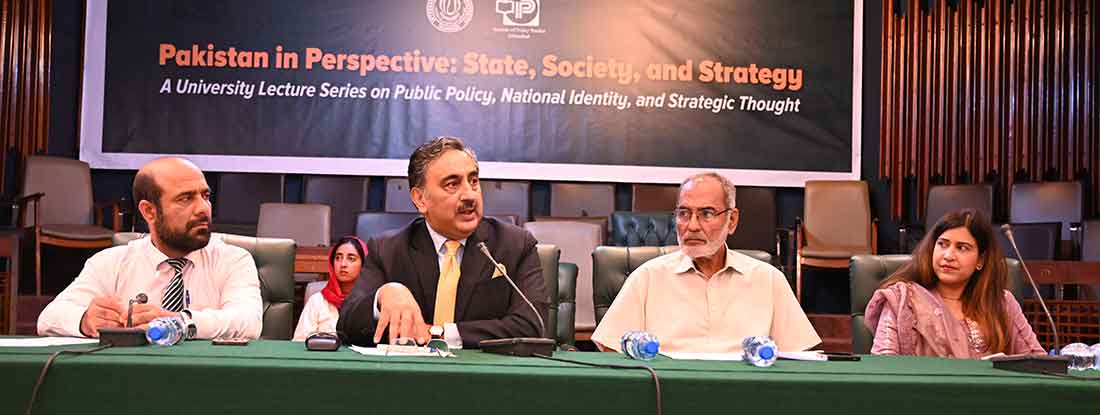
This emerged as the central theme during a lecture titled “Pakistan in Perspective: Constitution, State & Global Responsibilities,” the second in the university lecture series on public policy, national identity, and strategic thought, organized by the Institute of Policy Studies (IPS), Islamabad, in collaboration with the International Islamic University Islamabad (IIUI), on September 24, 2026.
Renowned legal expert and former federal minister for law, justice, and parliamentary affairs, Ahmer Bilal Soofi, delivered the guest lecture. He is also a former member of the IPS’ National Advisory Council (NAC). The session brought together students and participants interested in contemporary debates concerning Pakistan’s constitutional affairs, state institutions, international law, and global responsibilities.
In his opening remarks, Prof. Dr. Manzoor Khan Afridi, dean, Faculty of Social Sciences, IIUI, underscored the lecture’s relevance to contemporary discussions on the state, constitutional affairs, parliamentary matters, and Pakistan’s responsibilities in the global arena. He also highlighted the lecture as part of the continuing academic engagement between IIUI and IPS.
Delivering the keynote address, Ahmer Bilal Soofi emphasized the importance of examining national and international issues through informed and dispassionate analysis. Discussing Pakistan’s constitutional identity, he referred to the 1973 Constitution, which, he noted, strengthened Pakistan’s identity as an Islamic democratic country and provided for institutions such as the Council of Islamic Ideology and the Federal Shariat Court to safeguard this character.
Discussing international law, Ahmer Bilal Soofi highlighted the continuing relevance of principles including self-defense, equality, and fulfillment of contractual obligations. He noted that states adhering to international law can assume a leadership role in the international system. He also highlighted Pakistan’s geographical and cultural diversity as a potential strength, particularly in relation to the economic value of region-specific products and cultural expressions. He urged students to connect their academic learning with current developments, develop new ideas, and prepare themselves for an international role.
In his concluding remarks, Khalid Rahman, chairman, IPS, emphasized the importance of national languages as vehicles for knowledge and intellectual discourse while retaining proficiency in English. He cautioned that growing use of English should not distance students from Urdu and other national and local languages.
Reflecting on contemporary global affairs, Khalid Rahman encouraged students to follow developments at the United Nations and understand changing patterns of global power. He highlighted the emergence of new economic, political, and technological centers, the growing influence of private actors, and the increasing significance of artificial intelligence. He also discussed the shift toward a multipolar world and emphasized that international competition need not lead to conflict when frameworks for stability and cooperation are maintained.
The lecture was followed by an extensive question-and-answer session, allowing students and participants to discuss the issues raised during the session.