IPS Working Group on Kashmir Deliberates on Contemporary Situation and Way Forward
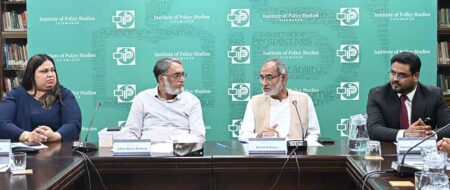
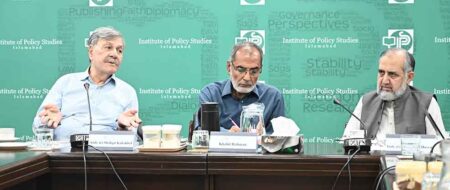
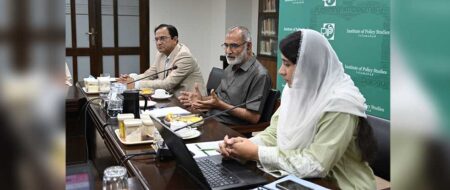
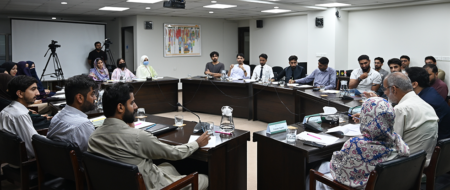
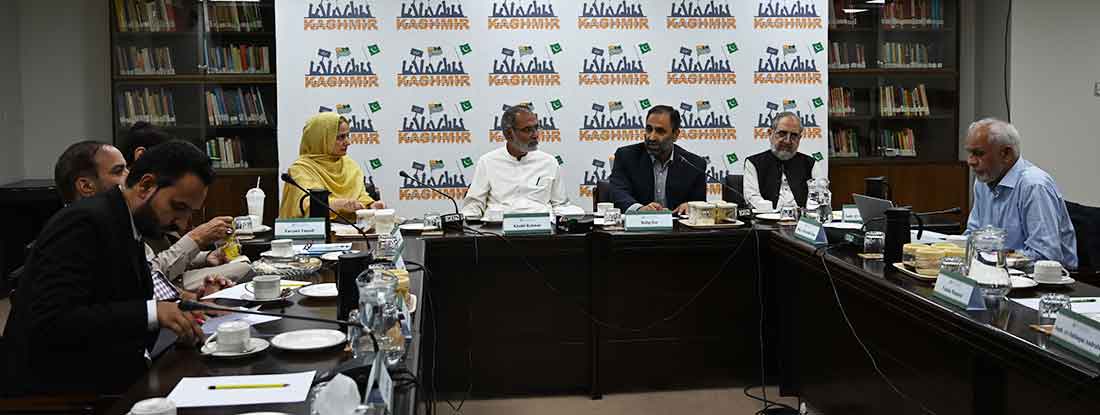
The Institute of Policy Studies (IPS) organized an in-house discussion on the contemporary situation in Kashmir on September 17, 2026, bringing together members of its Working Group on Kashmir to examine recent developments and deliberate on ways to strengthen political, diplomatic, legal, and intellectual engagement on the Kashmir issue.
The participants included Khalid Rahman, Chairman, IPS; Amb. (r) Syed Abrar Hussain, Vice Chairman, IPS; and members of the IPS Kashmir Working Group, including Dr. Waleed Rasool, Farzana Yaqoob, Rafiq Dar, Brig. (r) Khurshid Khan, Amb. (r) Ishtiaque Andrabi, Usama Hameed, Saleem Bismil, Raja Zakki Jabbar, Dr. Umair Pervez, and Iftikhar Gilani.
They discussed the evolving political and social environment in Indian-occupied Kashmir and highlighted the importance of understanding its implications for the Kashmiri people, particularly younger generations. The discussion emphasized the need to preserve awareness of the historical, political, and legal dimensions of the Kashmir dispute while responding to changing circumstances in the region.
A central theme was the importance of Kashmiri political agency and representation. Participants stressed that Kashmiri perspectives should remain integral to discussions on the issue and called for greater coordination among relevant stakeholders. They also discussed the challenges faced by the Kashmiri political movement over the years, including the need for greater synchronization and a coherent roadmap while retaining its indigenous character.
The participants examined the international and diplomatic dimensions of the issue, with particular emphasis on making more effective and coordinated use of available international forums. Reference was made to the United Nations framework and international legal institutions, alongside the importance of sustained diplomatic engagement.
The discussion also proposed stronger institutional interaction between Kashmiri representatives, international-law experts, and Pakistan’s diplomatic community. Participants suggested that appropriate consultative mechanisms, including confidential or in-camera briefings where necessary, could help incorporate informed Kashmiri perspectives into diplomatic deliberations.
The role of the Kashmiri diaspora was also discussed, with participants highlighting its potential contribution to international outreach and advocacy. Greater attention to educating and engaging younger generations on Kashmir’s history and legal and political dimensions was identified as an important long-term priority.
Participants further discussed the changing regional strategic environment and the interests of various international actors. They emphasized the importance of pursuing Pakistan’s diplomatic efforts while ensuring that the Kashmiri perspective remains adequately represented. The deliberations underscored the importance of sustained institutional engagement, informed policy research, diplomatic outreach, legal expertise, and meaningful engagement with Kashmiri stakeholders in addressing the contemporary dimensions of the Kashmir issue.
Concluding the discussion, participants called for a forward-looking and coordinated approach that identifies immediate, medium-term, and long-term priorities.