Tracing Responsibility: The Global Hand in Gaza’s Collapse
Tracing Responsibility: The Global Hand in Gaza’s Collapse
Khurshid Khan
As the military superpower, the US continues to shape global dynamics, maintaining a commanding role in addressing regional challenges – from the volatile Middle East and strategic Central Europe to the evolving complexities of Southeast Asia.
Since Hamas launched Operation Al-Aqsa Flood on October 7, 2023, the US has unswervingly supported Israel through extensive military, financial, and diplomatic means. This firm backing has enabled Israel to conduct military operations that, according to reports, have resulted in over 67,000 Palestinian deaths and more than 167,000 injuries. The US position in the conflict has fueled regional instability and eroded its credibility as a neutral mediator in Middle Eastern affairs.
The magnitude of destruction in Gaza draws haunting parallels to the atomic bombings of Hiroshima and Nagasaki by the US. History bears witness to the irreversible impact on the lives of those cities’ inhabitants, many of whom never regained a semblance of normalcy. Experts estimate that rebuilding Gaza could take up to 50 years, contingent on multiple factors. Yet, reconstruction alone cannot heal the trauma; the scars of the aggression will linger long after the last brick is laid.
The pressing question remains: who bears responsibility for the staggering loss of life and the enduring suffering of the people of Palestine? Though the global community cannot escape the blame for the atrocities committed by Israel, history will cast a harsh judgment on the US and its Western allies. This collective failure has not only deepened the humanitarian crisis but also eroded the moral fabric of global governance.
Unraveling Accountability: Global Complicity in the Tragedy of Gaza
A central narrative in Western media portrays Hamas as solely responsible for Gaza’s current tragedy. The US, along with its allies, has consistently shielded Israel across international forums. Yet, few have questioned what compelled Hamas to launch such an attack, despite its limited capacity. The deep-rooted infuriation of the Palestinian people stems from decades of Israeli policies and global indifference. Hamas’s actions were not spontaneous, but rather a culmination of mounting despair since the Oslo Accords of 1993. The following is a brief account of the events that led to Operation Al-Aqsa Flood:
- The Oslo Accords are generally viewed as a strategic setback for Yasser Arafat. In exchange for recognizing Israel and abandoning armed resistance, Arafat received Israel’s acknowledgment of the Palestinian Liberation Organization as the legitimate representative of the Palestinian people. It established the Palestinian Authority (PA) to administer designated areas of the West Bank/Gaza Strip, marking a foundational step toward Palestinian self-rule. Yet, the pact lacked a binding roadmap, while leaving many questions unanswered.
- Following Arafat’s death in 2004, Mahmoud Abbas assumed the leadership role of the PA. However, his tenure is marked by a decline in influence and an inability to restore the PA’s credibility. As Fatah’s, the largest faction within PLO, grip weakened in both Gaza and the West Bank, Hamas filled the vacuum by winning the 2006 legislative elections. The election aftermath was marked by intense political maneuvering – reportedly influenced by US pressure on Abbas – which rendered the formation of a unity government contentious and ultimately incomplete.
- The Fatah–Hamas rift deepened, culminating in a political split in 2007, with Hamas controlling Gaza and the PA limited to the West Bank. However, despite their political divide, both factions have periodically united in their resistance against Israel, jointly participating in a series of intifadas from 1987 to 2022, driven by the shared demand for the Palestinian ‘right of return.’
- Since 2007, the US and its Western allies have designated Hamas as a terrorist organization, despite its sweeping political victory in the 2006 elections. Between 2008 and 2023, the conflict between Israel and Palestinian fighters claimed approximately 6,407 Palestinian lives and left around 152,560 injured. Yet, despite numerous peacemaking initiatives, the world community has failed to find a path forward for the Palestinian people.
- On May 14, 2018, as US officials inaugurated their embassy in Jerusalem, Israeli forces fired on unarmed Palestinian protesters in Gaza, highlighting a stark contrast between celebration and violence. In 2020, President Trump once again shocked Palestinians by presenting a peace plan that broke from the two-state model, effectively endorsing Israeli control over the majority of its settlements in the West Bank and parts of Gaza.
- Before Operation Al-Aqsa Flood, the last uprising was the ‘Unity Intifada,’ which took place from April to June 2021. It was a powerful expression of Palestinian resistance against Israeli colonization and apartheid. It aimed to counter Israel’s strategic efforts to alter Jerusalem’s demographics by diminishing the Palestinian population and increasing Jewish Israeli presence. The uprising escalated in response to Israeli efforts to forcibly evict Palestinian families from the Sheikh Jarrah neighborhood of East Jerusalem.
- The 2021 escalation in Gaza was one of the most intense outbreaks of violence in recent years. UN Secretary-General António Guterres echoed this sentiment, declaring, “If there is a hell on earth, it is the lives of children in Gaza.” After nearly two weeks of protests, marked by arrests and violence, the barriers at Damascus Gate were finally removed.
- In early 2023, Guterres issued a stark warning: without decisive intervention from key stakeholders, the rising tensions between Israel and Hamas could spiral into a full-scale conflict. His remarks underscored the urgent need for diplomatic engagement to prevent further bloodshed and humanitarian catastrophe.
- Since 2007, Israel has turned Gaza and the West Bank into tightly controlled enclaves – often described as open-air prisons – under military rule and economic blockade, imposing severe hardships on ordinary Palestinians. Since the signing of the Oslo Accords, the number of Israeli settlers in the occupied West Bank and East Jerusalem had grown from 250,000 in 1993 to 695,000 three decades later in September 2023.
- From 1987 to 2022, the Palestinian struggle endured through multiple intifadas, marked by heavy casualties and destruction on both sides. Despite decades of unrest, meaningful resolution efforts remained absent, while Israel continued to receive consistent military, economic, and diplomatic backing from the US and its Western allies.
- Since 2007, Palestinians in Gaza have endured harsh conditions under blockade and military control. Hamas’s armed response emerged from this prolonged suffering, making it difficult to assign sole blame for the resulting crisis. Any fair evaluation must consider the root causes, not just the consequences.
Trump’s Gaza Peace Blueprint: Regional Stakes and Fallout
The growing unease among Muslim-majority states in the Mideast stems from the persistent paralysis of the UNSC, which has failed to curb Israel’s pursuit of strategic objectives rooted in a realist doctrine of “might is right.” Backed by unwavering US military/diplomatic support, Israel is seen by many observers as incrementally advancing a broader territorial vision often referred to as the “Greater Israel” doctrine. Speculation suggests that, having consolidated control over the West Bank and the Gaza Strip, Israel may eventually redirect its strategic ambitions outward. Over time, even a major power like Saudi Arabia could find itself entangled in this evolving geopolitical calculus.
Despite sustained efforts by the Gulf Cooperation Council (GCC) leadership to align with US interests – most notably during Trump’s high-profile visit to the region in May 2025 – Washington has continued to demonstrate resolute support for Israel. This persistent bias has frequently come at the expense of the strategic priorities and security concerns of GCC member states. The US-backed Israeli engagement with Hamas leaders in Qatar has prompted a strategic shift in the Gulf, with regional states reassessing alliances and exploring alternative security partnerships.
Despite Trump’s belated attempt to rebuild trust in the Mideast, his gesture of extending a security guarantee to Qatar is unlikely to achieve its intended effect. Trump’s executive order states that “The United States shall regard any armed attack on the territory, sovereignty, or critical infrastructure of the state of Qatar as a threat to the peace and security of the United States.” However, this assurance without Senate approval comes too late to shift regional dynamics.
Amid escalating volatility in the Middle East and growing pressure from Western allies, Trump has unveiled a hastily assembled 21-Point Peace Plan to end the Gaza war. However, Trump appears more focused on securing a global peace award through self-proclaimed achievements than on pursuing a genuine, lasting resolution to the Israel-Palestine conflict. The ambiguities and gray zones within Trump’s proposed plan include:
- The plan centers on the release of hostages and the disarmament of Hamas, measures that effectively strengthen Israel’s strategic leverage over Gaza’s future political and security landscape.
- The plan fails to ensure genuine political representation for the Palestinian people in the Gaza Strip, leaving their future governance in limbo for an indefinite period.
- While the plan may achieve its short-term goal of ending active hostilities, it does not provide the structural framework needed for a lasting solution to the Israel-Palestine conflict. Although it hints at a two-state solution, it fails to propose concrete steps to turn that idea into reality.
- The plan fails to provide a clear timeline for the complete withdrawal of Israeli forces from Gaza. Once Hamas releases the hostages, Israel may prolong its military presence, potentially subjecting Gazans to extended hardship and instability, conditions that could surpass even the suffering endured before October 7, 2025.
- While the plan may not permanently eliminate the prospect of a two-state solution, its design appears likely to stall meaningful progress for another two decades, effectively sidelining Palestinian statehood under the guise of temporary stabilization.
- Much like the Oslo Accords, the plan fails to provide a clear and actionable roadmap for a two-state solution grounded in the 1967 UN resolutions.
- The plan omits any directive for the Israeli government to cease settlement expansion in the West Bank, effectively signaling tacit approval for such expansion.
- The plan remains informal, lacking endorsement from the US Senate or the UNSC, casting serious doubt on its legitimacy and long-term viability. Trump’s erratic and transactional approach to Middle East diplomacy, marked by abrupt shifts in tone and policy, has fueled deep skepticism among Arab leaders.
- Their trust was further shaken when Trump alone altered key elements of the plan that had been tentatively agreed upon with Muslim leadership during closed-door meetings. This abrupt shift shattered fragile diplomatic unity and exposed the inconsistent nature of US commitments, casting serious doubt on Washington’s credibility as a lasting peace broker.
- The plan portrays the PA as dysfunctional in governing both Gaza and the West Bank, calling for its structural overhaul. As a result, even if Hamas is sidelined as a legitimate political force in Gaza, the PA is effectively excluded from playing any role in Gaza in the foreseeable future, leaving a political vacuum that undermines Palestinian self-determination.
- Finally, Trump’s peace plan is fraught with shortcomings, offering little beyond the release of Israeli hostages and a limited prisoner exchange. Thus, grave challenges lie ahead for Palestinians in both Gaza and the West Bank. If key global powers, including the Saudi-led GCC, fail to apply sustained diplomatic pressure on Israel, the conflict could escalate further in the near term. The neighboring countries, like Jordan and Syria, may need to prepare for the possibility of Israeli expansionism and regional destabilization.
US Credibility at Stake: Who Will Profit from its Mideast Ambiguity?
The US was founded on the principles of justice, human rights, and compassion. Its vibrant civil society continues to demonstrate an unwavering commitment to these values, often standing in solidarity with oppressed communities around the world, including the Palestinians.
However, the US’s inconsistent policies in the Mideast continue to erode its credibility as a principled global actor. During both his previous and current tenures, Trump has demonstrated a preference for short-term optics over long-term peace and stability. For example, the Abraham Accord between Israel and the UAE, signed during his first term, was emblematic of this – limited in scope and failing to address the core issues of the Israeli-Palestinian conflict.
During his current tenure, Trump has openly favored Israel, disregarding international norms. His approach has alienated key allies across the Middle East. Presented with a historic opportunity to broker a lasting resolution, he instead opted for a short-term political win by temporarily halting the Gaza war, leaving the deeper roots of the conflict untouched and the path to peace obscured.
Conclusion
While Trump may earn short-term praise for brokering a ceasefire, he risks forfeiting the legacy of a truly visionary leader. His current Middle East policy – marked by strategic ambiguity and a transactional mindset – has opened the door for rival powers, such as China and Russia, to expand their influence and fill the void left by faltering US leadership. With valuable time already lost to indecision, the GCC is recalibrating its strategic posture, actively exploring new alliances to secure its long-term regional interests. Pakistan has already signed a strategic defence agreement with Saudi Arabia, marking deeper military ties. Deputy Prime Minister Ishaq Dar has suggested it could evolve into a NATO-style alliance of 57 Muslim nations led by Pakistan. In this shifting landscape, power politics is gaining ground over peace.
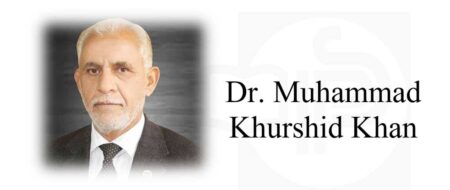
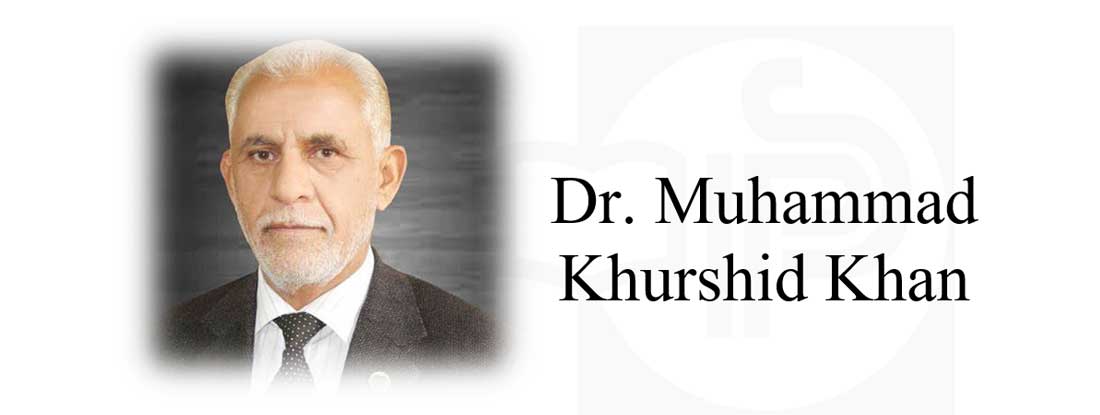
Dr. Muhammad Khurshid Khan SI (M) is a retired brigadier of the Pakistan Army and a fellow at the Stimson Center, Washington, D.C. He holds an MSc in Defence and Strategic Studies from QAU, Islamabad, and a PhD in IR from NDU, Islamabad. He served for five years in the Strategic Plans Division (SPD) in the Arms Control and Disarmament Affairs (ACDA) Directorate, and for three years at ISSRA, NDU, in multiple leadership roles. He has authored numerous works on national and strategic affairs.