Moral and values-based education are crucial for strengthening community relations
Bangladesh presents a unique model of religious co-existence and cultural pluralism in South Asia, as a cornerstone of its national identity and social stability. In nations with diverse population and a heritage of tolerance, like Bangladesh and Pakistan, religion plays a vital role in shaping moral conduct, guiding social values, and strengthening community relations.
These societies also face emerging social and ideological challenges. To counter these, strengthening moral and value-based education must be a strategic priority, along with utilizing religious principles as constructive means for advancing national unity, reinforcing solidarity, and promoting an inclusive society built on respect, peace, and shared prosperity.
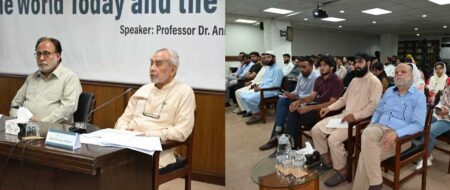
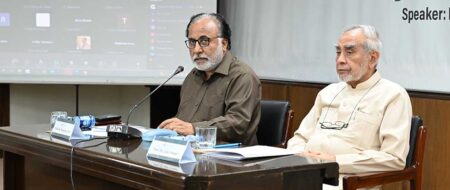
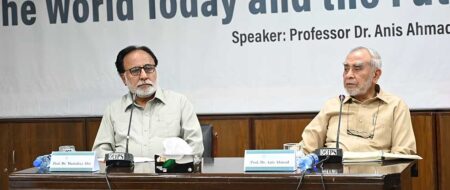
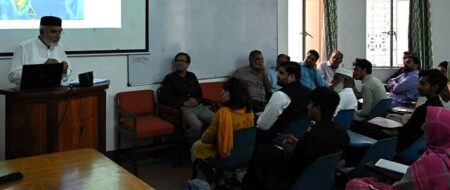
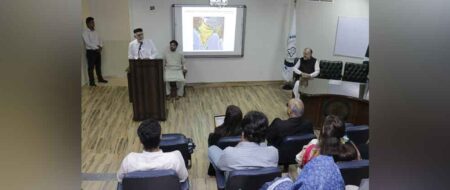
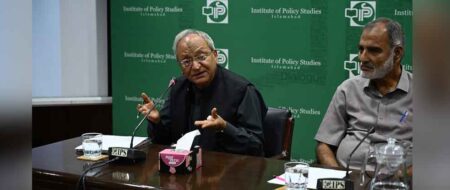
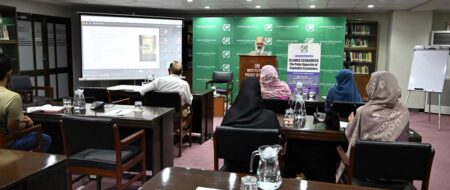
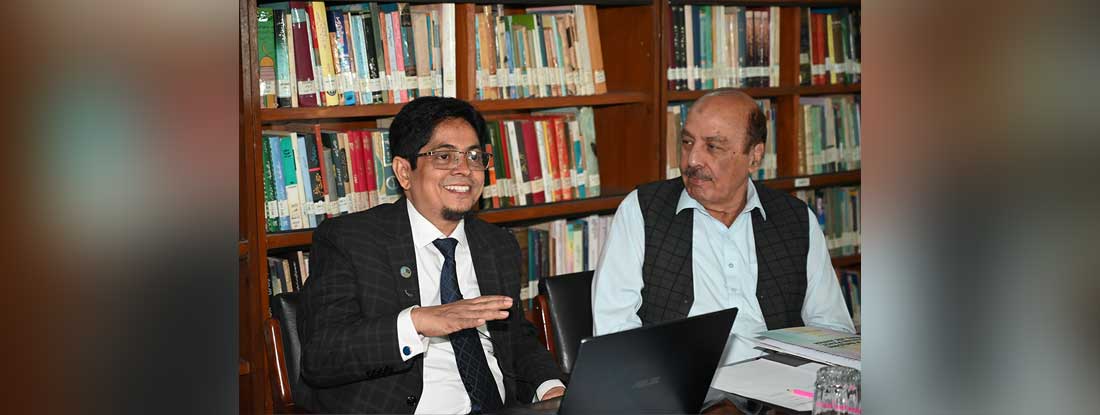
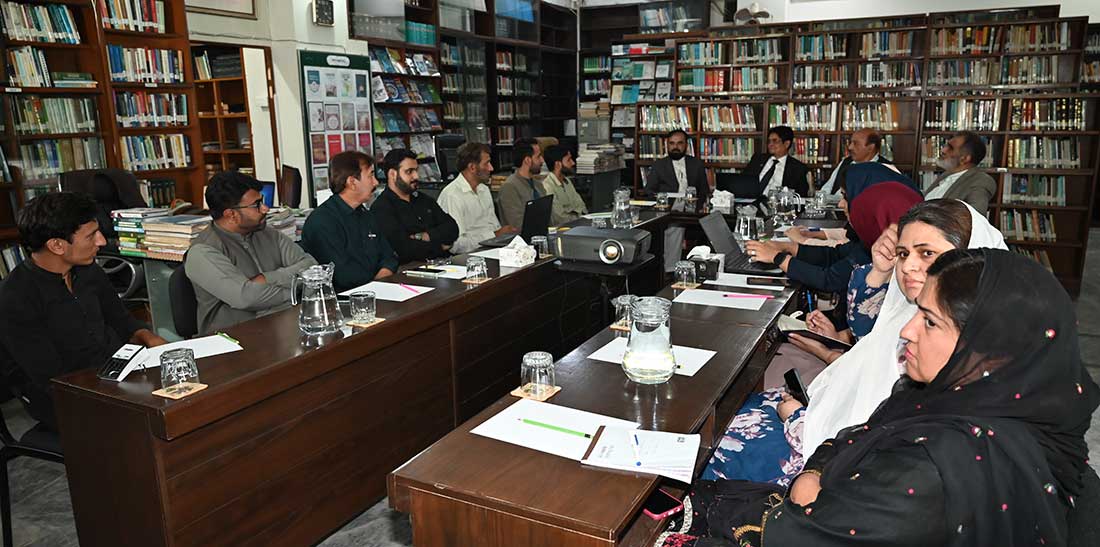
This was noted by Dr Abdul Kalam Azad, associate professor, Manarat International University, Dhaka, Bangladesh, during his lecture titled “Religion, Religious Education, and national solidarity in Bangladesh” held at the Institute of Policy Studies (IPS), Islamabad, on November 4, 2025. The concluding remarks were given by Dr Shahzad Iqbal Sham, senior research fellow IPS, while Syed Nadeem Farhat, research fellow IPS, moderated the session.
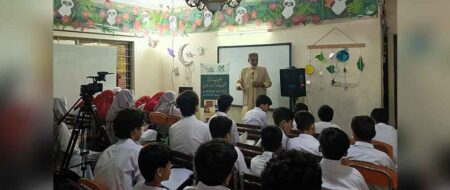
Dr Abdul Kalam explained that Bangladesh is a multireligious and multicultural society where Islam, Hinduism, Buddhism, and Christianity coexist. Historically, Bangladesh emerged from a deeply pluralistic culture that welcomed diversity and emphasized peaceful coexistence. He shared an example demonstrating everyday interfaith harmony, explaining the people interact freely without focusing on religious identity, reflecting the absence of discrimination between Hindu, Muslim, and Christian communities in social life.
Furthermore, he emphasized that Bangladesh’s constitution guarantees freedom of religion in 1972 Constitution through Article 41, allowing every citizen the right to profess, practice, and propagate their faith. Dr Azad highlighted that this constitutional framework supports national unity by encouraging mutual respect and constitutional protection for all the religious groups.
The role of religious education was also discussed. He stated that both madrassa and general education system must aim to develop balanced personalities grounded in moral values. Religious teachings help build ethical citizenship and social responsibility. He shared examples from daily business life to show how religious molarity influences professional behavior, promoting honesty and fairness. He noted that ones’ religion is reflected not by the appearance or words but through the character and actions.
The challenges to the religious harmony were also discussed, such as religious extremism, politicization of religions, digital radicalization, and the marginalization of minority voices. Despite these issues Dr Azad emphasized that pluralistic societies must remain committed to fostering tolerance and strengthening moral education to counter these threats. Religious principles continue to be seen as a powerful tool for promoting unity, social cohesion and national solidarity.
In his concluding remarks, Dr Shahzad Iqbal Sham emphasized that character, ethics, and interfaith understanding are central to national solidarity and social harmony. At the end of session, he thanked Dr. Abdul Kalam Azad for his informative lecture and for sharing valuable insights.