IPS Organizes Session on Communication and Perception in the Digital Age
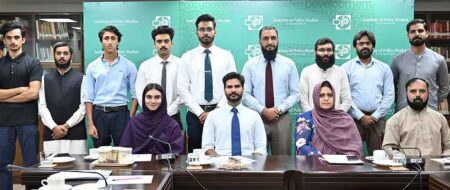
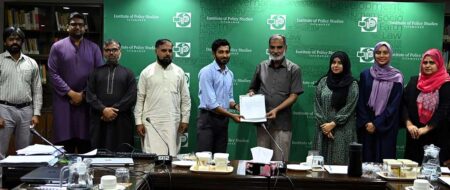
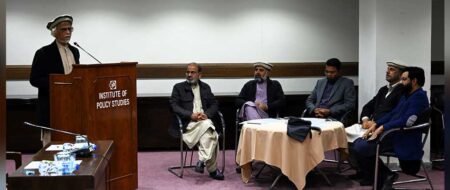
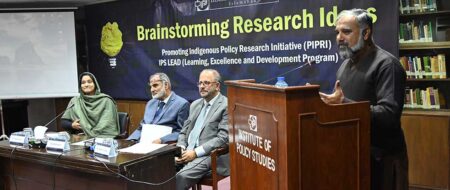
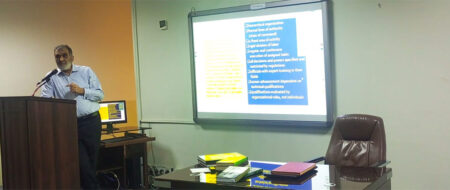
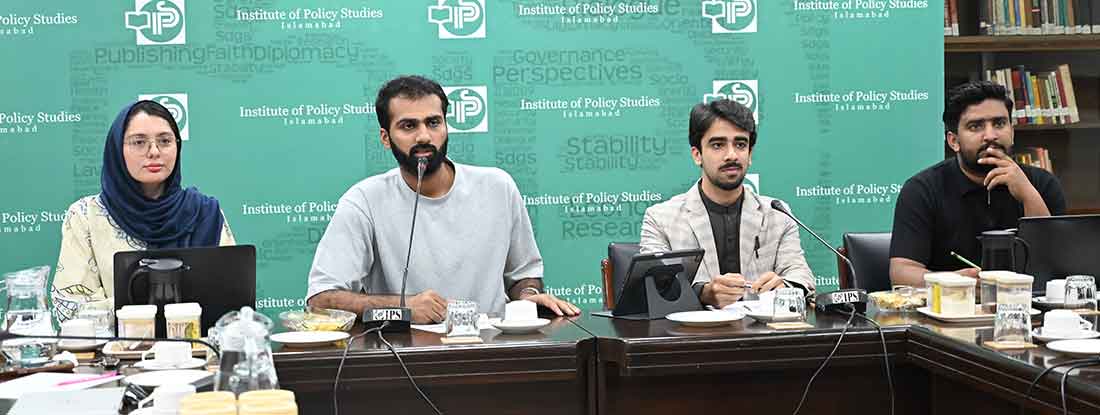
The Institute of Policy Studies (IPS), Islamabad, organized a session, on October 20, 2026, titled “Beyond Information: How Communication Shapes Perceptions in the Digital Age” under its Digital Advocacy Program, featuring Talha Aslam Shorwala, a social entrepreneur and technology professional, as the guest speaker.
In her opening remarks, Saba Maarif, Assistant Manager, Outreach, IPS, welcomed the guest speaker and participants attending the session in person and online. She highlighted that public perceptions are shaped not only by the information people receive but also by their existing beliefs, social environments, and the way messages are communicated. She emphasized the need for digital advocates to communicate thoughtfully and strategically to influence public opinion.
Muhammad Ehsan, Communication and Outreach Officer, IPS, moderated the session and introduced the guest speaker, highlighting his work in technology, education, media, and social impact, including his engagement with SHOR and Exclusive School System and Pakistan’s advertising technology ecosystem.
Speaking on the subject, Aslam explained how digital content, humor, satire, and repeated exposure influence audience perceptions. Using examples from social media, he noted that people increasingly form opinions through sustained engagement with multiple pieces of content rather than relying on a single video or message. He observed that perceptions evolve over time as audiences encounter different aspects of an individual or organization’s identity.
Aslam emphasized that perceptions are ultimately shaped by message recipients rather than solely by those communicating the message. He explained that individuals interpret information according to their experiences, attitudes, and social backgrounds, while organizations can strategically shape their image among different audiences through deliberate and consistent communication.
Discussing the changing digital landscape, he highlighted the democratization of information production and distribution, which enables individuals to create and disseminate content through social media platforms. He also drew attention to the influence of algorithms on users’ information consumption, stressing the importance of consciously managing digital engagement and periodically reassessing the content one follows.
The session featured an interactive discussion in which participants shared observations and raised questions about misinformation, personal experiences, algorithmic influence, echo chambers, and the role of verification in shaping public understanding. Responding to their contributions, Aslam underscored the importance of critically examining digital messages rather than accepting information at face value.
The session concluded with a discussion on the need for informed, deliberate, and responsible communication practices in an increasingly interconnected digital environment.