Human relations in Islam rest on gender justice, instead of gender equality
In Islam, gender justice forms the foundation of family relations. Rooted in ethical equality and fairness, it ensures dignity for both men and women as true empowerment emerges through complementarity and balance, creating harmony within family and society.
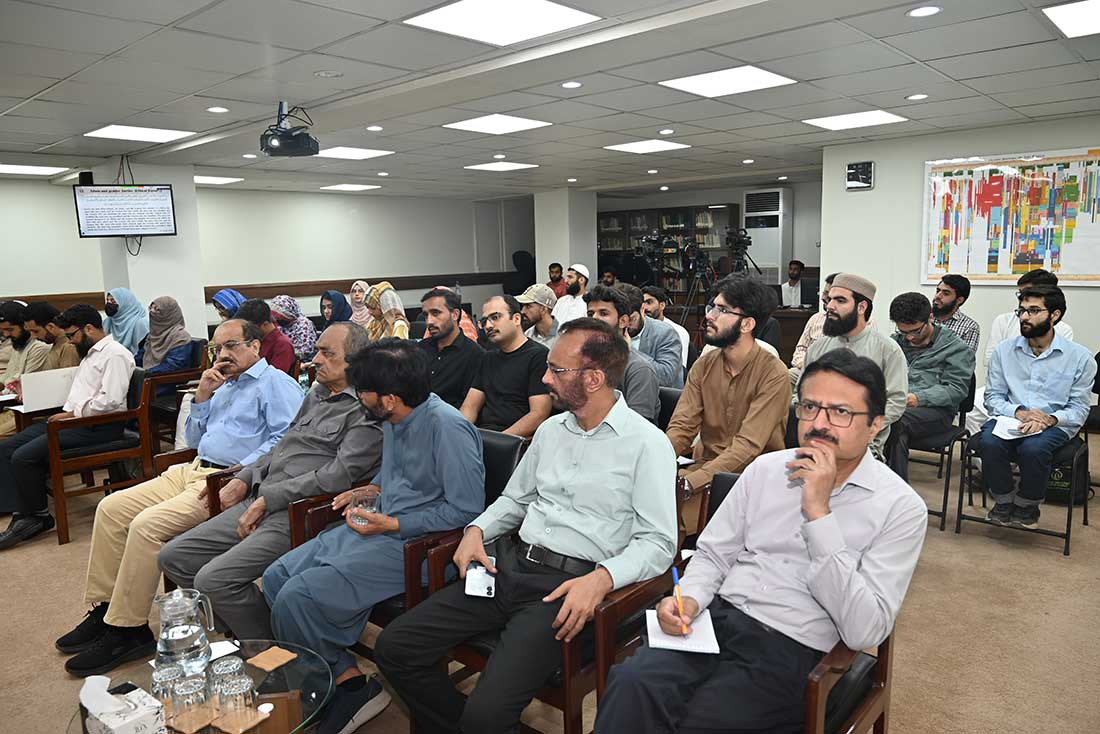
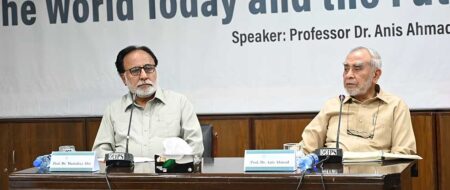
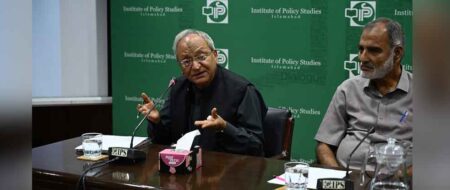
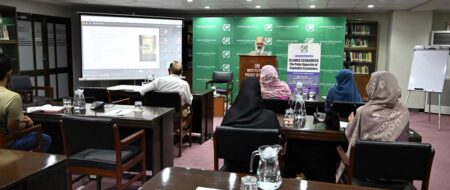
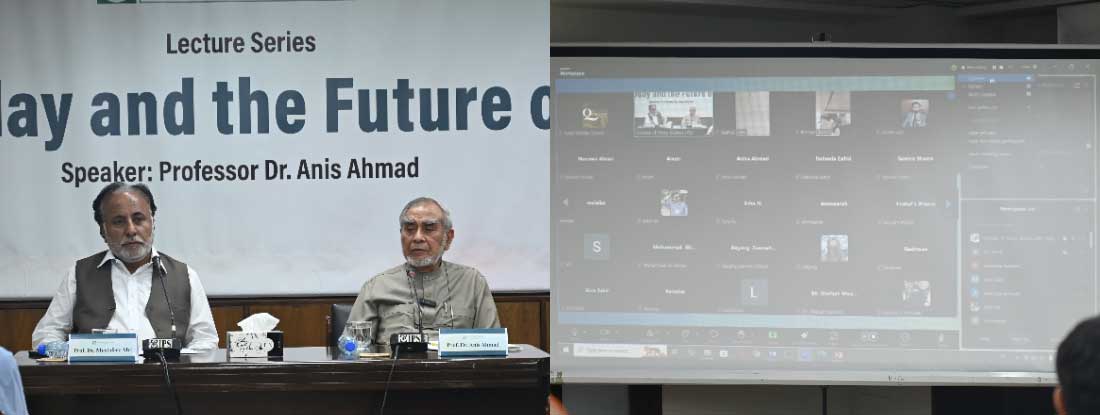
This was observed by Prof Dr Anis Ahmad, vice chancellor, Riphah International University, during a thought-provoking lecture titled “The Essence of Human Relations: Family, Gender Roles, and Society,” held at the Institute of Policy Studies (IPS), Islamabad, on July 31, 2025. The session was also addressed by Dr Redhwan Karim, lecturer, The Markfield Institute of Higher Education, and moderated by Prof Dr Mustafeez Alvi, senior IPS associate and former dean, Faculty of Social Sciences, NUML, Islamabad.
The lecture underscored the centrality of family as the nucleus of human relations in Islam. He emphasized that the family is not merely a social unit but an ethical and spiritual foundation upon which a taqwa-oriented society, culture, and civilization are built.
Highlighting the ethical need of human existence, Prof. Ahmad explained that Islam defines family as an ethical unit, where the proper upbringing and education of children is not just a responsibility but a religious obligation. He called for a paradigm shift in recognizing family’s cosmic dimension, citing the Qur’anic perspective of complementarity, akin to yin and yang, where man and woman complete each other to form a unified whole.
Prof. Ahmad described the family as a source of consolation, love, and moral support, built upon both legal and moral contracts, as well as social obligations. He stressed that a strong family system not only nurtures individuals but also empowers society as a whole.
On the question of women’s empowerment, he clarified that economic empowerment is embedded within the concept of worship in Islam, and women have been granted economic rights as part of their faith. Addressing the debate on gender, he argued that Islam does not pursue gender equality in the Western sense, but rather promotes gender justice and ethical equality, which recognize natural distinctions while ensuring fairness and dignity for all.
The lecture concluded with a call to revisit Islamic principles to strengthen the institution of family, advance gender justice, and ensure a society rooted in ethical and spiritual values.