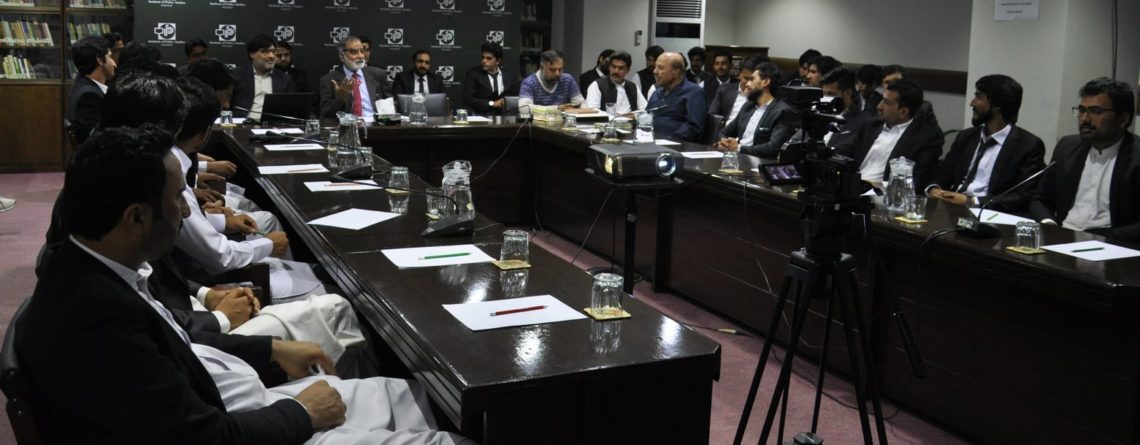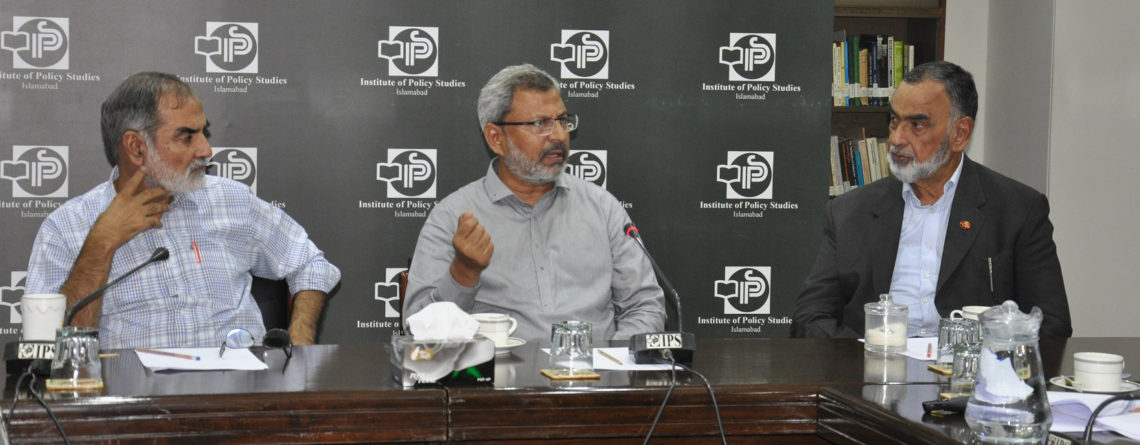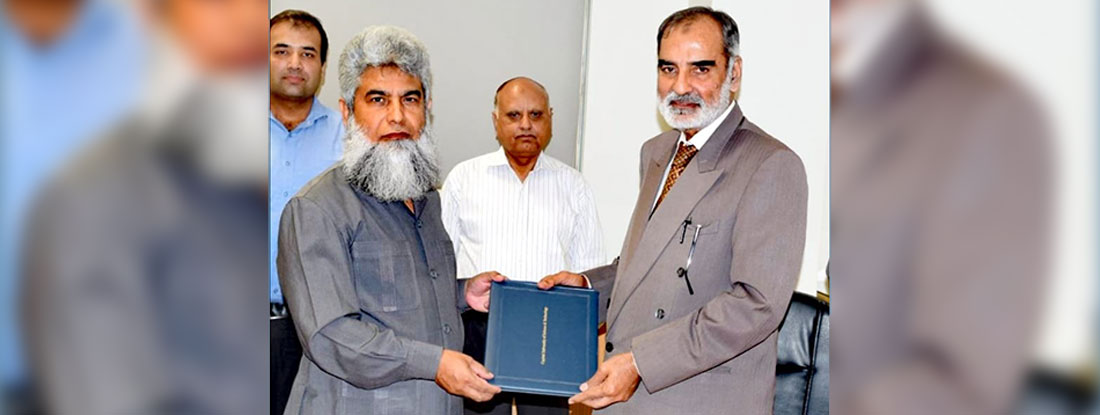
IPS, CUST sign MoU to promote policy-oriented academic volunteerism
A memorandum of understanding was signed between Institute of Policy Studies (IPS), Islamabad and Capital University of Science and [...]
A memorandum of understanding was signed between Institute of Policy Studies (IPS), Islamabad and Capital University of Science and [...]
A delegation comprising students from the law department of Shaheed Benazir Bhutto University, Sheringal (SBBUS), Upper Dir, Khyber Pakhtunkhwa, [...]
Aimed at understanding the observations of a nationwide study on the conditions, aspirations, and problems of Christian, Hindu, Sikh, [...]
Some solar vendors in Pakistan are installing non-compliant, low quality PV modules which neither conform to international standards, nor [...]
Afghan warlords and mercenaries were the real beneficiaries of the US invasion and occupation of Afghanistan, which continued for [...]
Dr Hatim Zaghloul, an Egyptian-Canadian telecom scientist, founder and CEO, Inovatian Inc., globally known for his pioneering role in [...]
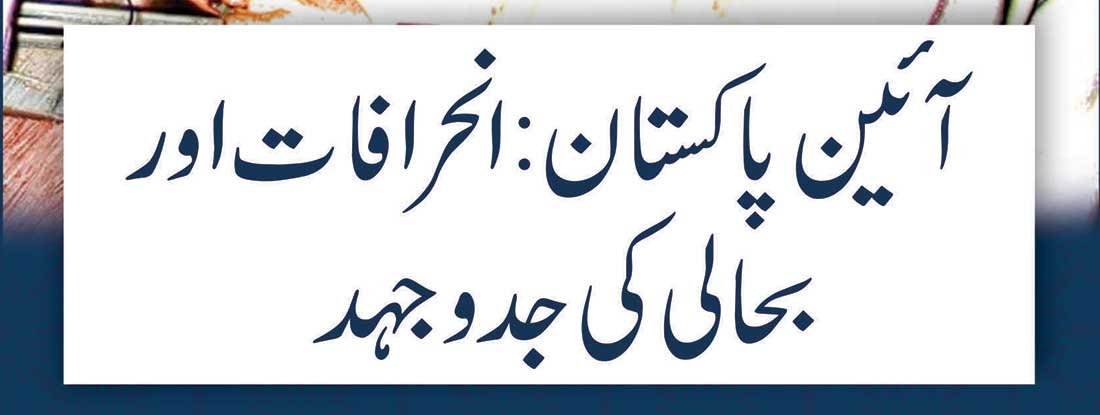
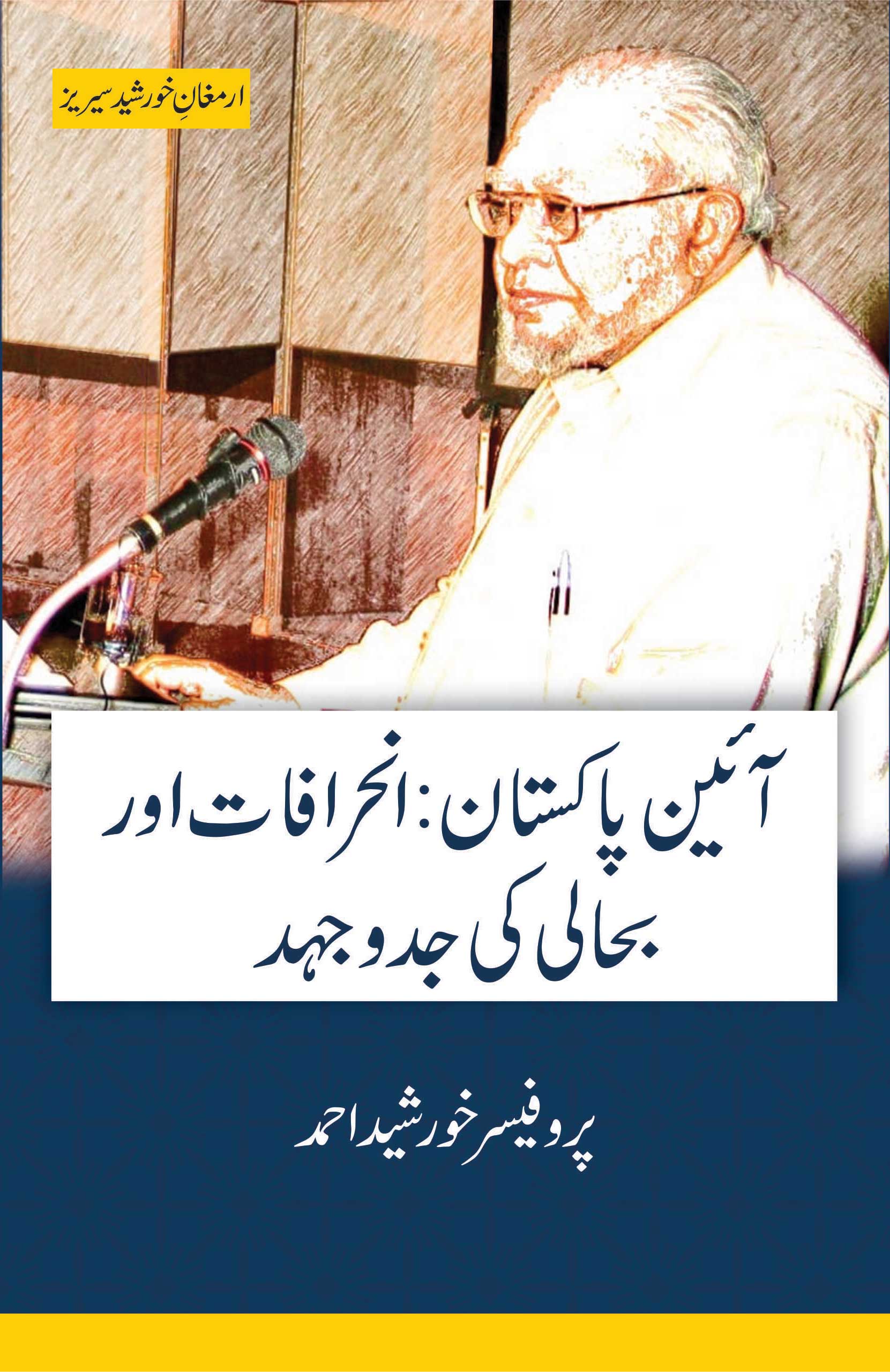
(Constitution of Pakistan: Deviations and Struggle for Restoration) Author: Professor Khurshid Ahmad Binding: Paperback Pages: 214 Language: UrduYear/Edition: 2021 ISBN: [...]
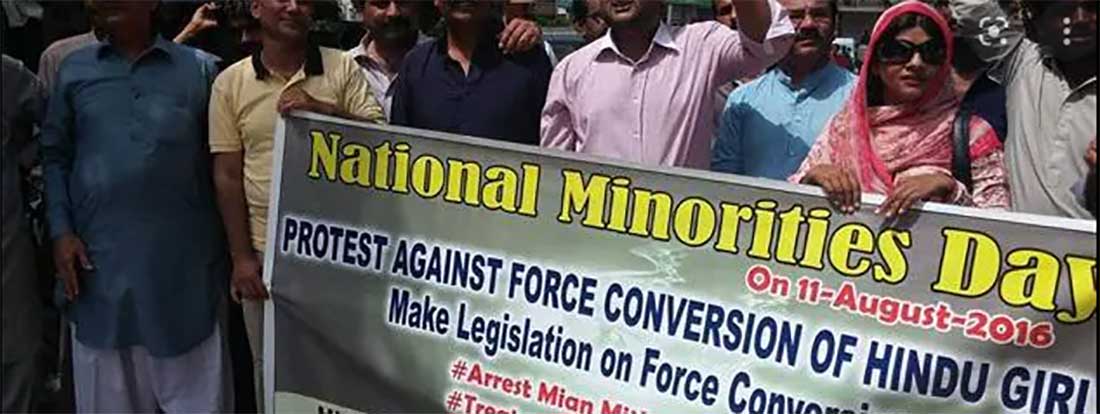
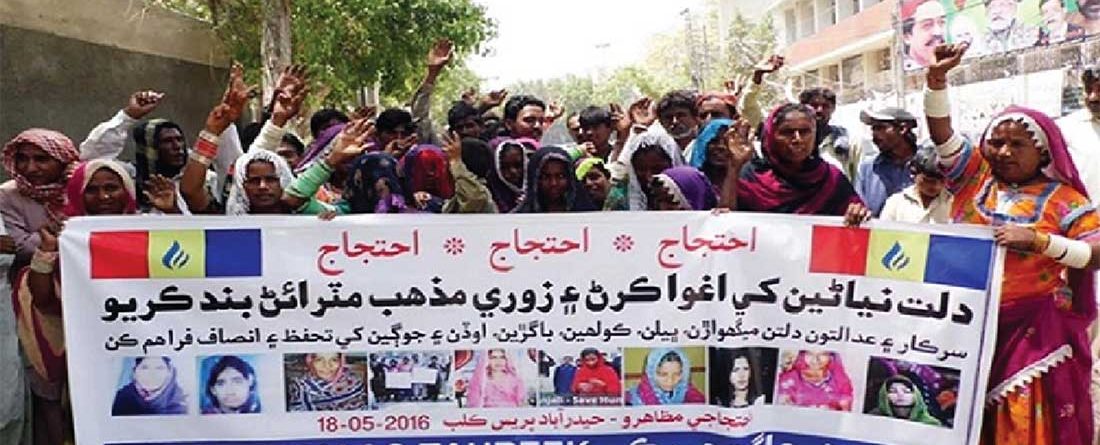
Islamabad, 17 October 2021: There is no evidence suggesting that non-Muslims, including underage girls, have been forcibly converted to Islam in [...]
Report based on the preliminary analysis of the quantitative and qualitative data Institute of Policy Studies (IPS), Islamabad is currently [...]
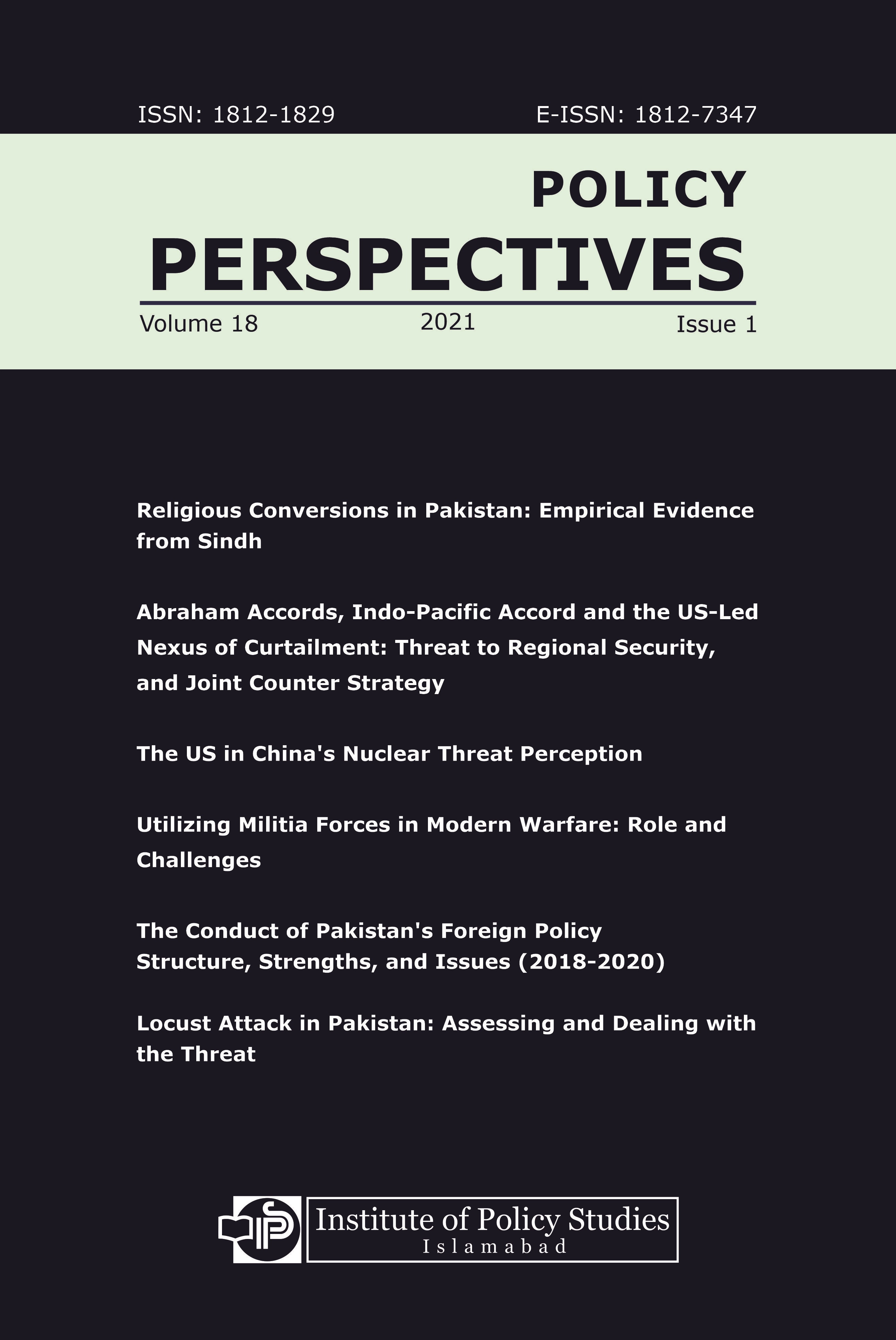
Editor-in-Chief: Khalid Rahman Editor: Dr Atiq-uz-Zafar Volume: 18Number: 1 Retail Price (Pak): PKR600 Annual Subscription: PKR1000 Export Price: $60 [...]
Ghulam Hussain*
Abstract
* Research Associate, Institute of Policy Studies (IPS), Islamabad, Pakistan; Doctoral Fellow, Department of Anthropology, Quaid-i-Azam University, Islamabad, Pakistan. This paper is part of an ongoing IPS Research Program.
Pakistan is often discussed at domestic and international forums in the context of its treatment of the religious minorities and more particularly the alleged forced religious conversions to Islam. This paper is in continuation of a recent report by the author that discussed the narrative of systematic and organized forced religious conversions in Pakistan to show that it is not supported by any data or verifiable evidence. The paper presents preliminary results of the fieldwork that collected data from the province of Sindh in Pakistan. The data gathered comprises audio-visual interviews from a cross-section of the society, official documents, and data of converts. While the study could not find cases of forced conversion, it notes that the force is used against the neo-converts through various means. It identifies 13 push and pull factors that contribute to religious conversions in the context of the area of this study. It also looks into the widespread perception of only women being converted, or the age of converted individuals generally being below 18 years.
Keywords: Forced Conversions, Scheduled Castes, Faith, Islam, Hinduism, Minorities.
* Research Associate, Institute of Policy Studies (IPS), Islamabad, Pakistan; Doctoral Fellow, Department of Anthropology, Quaid-i-Azam University, Islamabad, Pakistan. This paper is part of an ongoing IPS Research Program.
Abraham Accords, Indo-Pacific Accord and the US-Led Nexus of Curtailment: Threat to Regional Security, and Joint Counter Strategy
Shabana Syed* and Zainab Ahmed**
Abstract
The Abraham Accords emerged against a background of a new geostrategic reality of shifting balances of power towards Eurasia. They have served to elevate Israel and cause divisions among Muslims to intensify the Arab-Iran conflict. The Accords also signaled that the US could now direct its focus on China, which it considers an existential threat for its global hegemony. Asia-Pacific region is fast transforming through economic growth led by China, and economists have heralded this phenomenon as the emergence of the ‘New Asian Century.’ This paper argues that the US might resort to create constructive chaos in the region through its alliance with Israel and India. Washington has put this strategy in place since 2001 and it has been successful in taming the region in the its favor. In continuation to the War on Terror (WoT) policies that targeted Muslim nations, the US reinvigorated its Pivot to Asia’ policy which targets China, Russia, Iran, and Pakistan. A major threat for Washington is the expansion and recognition of Beijing’s ambitious Belt and Road Initiative (BRI) that will transform the global geopolitical landscape, connecting it with 65 countries across the globe. China-Pakistan Economic Corridor (CPEC) being a major project in the framework of transnational connectivity has huge potential for Pakistan. India is playing a key role as a lynchpin for the US in the region and is perturbed equally from the rise of China, and regional development projects of the latter. China, Russia, Pakistan and Iran need to devise a joint regional strategy to safeguard their collective interests. If the US fails in its objective to contain China and its developing alliances, it will attempt to destabilize the region through the strategy of constructive chaos.
Keywords: Abraham Accords, Indo-Pacific, Asia-Pacific, Curtailment, Arab-Israel-India Nexus, BRI.
* Geostrategic Analyst; affiliated with the Golden Ring Economic Forum (GREF), Lahore, Pakistan.
** PhD; Visiting Lecturer, Department of Political Science, University of the Punjab, Lahore; Senior Research Fellow, Golden Ring Economic Forum (GREF), Lahore, Pakistan.
The US in China’s Nuclear Threat Perception
Khusrow Akkas Abbasi* and Zahida Khalid**
Abstract
China’s nuclear threat perception, of which its nuclear weapons program is the by-product, is driven by the external strategic environment where the United States (US) is a key player. Chairman Mao Zedong, after the US nuclear intimidation during the Korean War and the Cross-Strait Crises, considered that nuclear weapons were central not only to deter their potential use against China but also to counter the nuclear threat. The geostrategic location of the country makes it vulnerable to a few nuclear powers. However, not all of these states constitute a key concern in Beijing’s nuclear threat perception. In this regard, an analysis of the US nuclear weapons program and capabilities would help understand China’s nuclear threat perception. The paper aims to explore the threat that China perceives from the US given the latter’s growing focus against it, including through its nuclear arsenal. The study, after a brief historical background, begins with a cursory discussion on theoretical underpinnings for threat perception. The next section outlines the US nuclear weapon policy and capability that has a bearing on China’s nuclear threat perception. The paper argues that with its intentions and excessive capability, the US is a primary actor in shaping China’s nuclear threat perception and altering its long-standing nuclear weapons policy and modernization of its nuclear forces.
Keywords: Nuclear Weapons, United States, China, Conventional Prompt Strike (CPS), Ballistic Missile Defense (BMD).
* PhD Scholar, Department of Political Science and Public Policy, University of Waikato, Hamilton, New Zealand.
** Assistant Editor, Policy Perspectives, Institute of Policy Studies (IPS), Islamabad, Pakistan.
Utilizing Militia Forces in Modern Warfare: Role and Challenges
Muhammad Nasrullah Mirza* and Naveed Mushtaq**
Abstract
The militia as an informal pro-government irregular force helps government forces through a range of asymmetric security threats. Since 9/11, the employment of militia forces has been on the rise. Although the informal Pro-Government Militias (PGMs) operate in juxtaposition with the regular land forces, they are loosely aligned with them. Given the nativity of its members to the battlefield, a militia is best suited to comprehend the operational and tactical situation and, making itself a viable option for state-led forces both from the perspective of low-cost force or its flexibility to deal with irregular threats. Most informal PGMs maintain a stronger ideological and political base, they do not often care about the limitation of their sponsoring state’s sovereignty and the legitimacy of their actions. They may even develop linkages with the terrorist outfits for their immediate goals. This puts national security in grave danger. Given the risks, weaker states become vulnerable at the hands of their sponsored militants. Still, the state-led forces will remain inclined to exploit such paramilitary forces to let them shoulder the burden of national security against asymmetric threats.
Keywords: PGMs, Militia, Modern Warfare, Middle East, Irregular Warfare.
* PhD; former Senior Faculty Member and Head, Department of Defence and Strategic Studies, Quaid-i-Azam University (QAU), Islamabad, Pakistan.
** MPhil scholar, Department of Defence and Strategic Studies, Quaid-i-Azam University (QAU), Islamabad, Pakistan.
The Conduct of Pakistan’s Foreign Policy: Structure, Strengths, and Issues (2018-2020)
Tajammul Altaf *
Abstract
Owing to its character and location, Pakistan is among the countries that often remain in international focus. Situated in one of the world’s most-happening regions, the state and nation of Pakistan always have several challenges and options to work their way through. Naturally, the foreign office of Pakistan is expected to do a lot on various fronts to tap the opportunities, deal with the challenges, safeguard national interests, and serve overseas Pakistanis. This office, however, works with several limitations in terms of its capacity and the liaison with the relevant policy-making institutions in the country. The incumbent government in Pakistan had come with the promise of strengthening the foreign service of Pakistan through expansion, modernization, and better coordination. It, however, seems to have a lot more to do during the rest of its current tenure to actualize its promise. There certainly are achievements and positive developments that offer foundations for further developments but a detailed look at the conduct of national policy asks for a renewed and more inclusive approach at the external front. This paper reviews the operational, institutional, and political factors that have shaped the conduct of foreign policy by the current regime during the first half of its five-year tenure. It underscores the strengths and issues that need to be acknowledged and properly tackled.
Keywords: Pakistan, Foreign Policy, Imran Khan, PTI, Diplomacy.
* Former diplomat; Senior Research Associate, Institute of Policy Studies (IPS), Islamabad.
Locust Attack in Pakistan: Assessing and Dealing with the Threat
Bukhtawer Pervaz*
Abstract
The recent locust attack in Pakistan is a grave threat to food security during the pandemic of Covid-19. The government was cognizant of the threat and made strategies to overcome it. The phenomenon, however, is neither new nor over. The risk to the food security is very real and needs a cross disciplinary approach to understand the phenomenon, a transnational synergy to monitor, prevent, and control the outbreaks, and a global effort to train and equip the developing nations against the threat. Pakistan needs to remain vigilant and alert in order to monitor the internal breeding grounds in Balochistan, Sindh and Punjab, and to keep an eye on the transnational movement of the insects that might enter Pakistan. It also needs to strategize the effort through sustained national cohesion and by taking all the stakeholders onboard. This paper examines the recent locust attack and the government’s response towards it. It further analyzes the threats to food security and the government strategies to be adopted. The consequences of such incidents for Pakistan in future would be disastrous in the absence of policies and in view of the unstable national economy. The locust attacks would not only pose a threat to food security; they would cause reduction in exports and necessitate import of food products. This will ultimately disturb the balance of payments, resulting in more loans. The paper aims to provide possible policy recommendations to deal with such threats, institutional arrangements, and strategies that may be workable at the micro and macro levels.
Keywords: Locusts, Pakistan, COVID-19, Outbreak, Food Security, Pandemic.
* Research Officer, International Institute for Global Strategic Analysis (IIGSA), Islamabad, Pakistan; Policy Researcher, Global Foundation for Cyber Studies and Research, Washington, DC, USA.